How do a billion people celebrate and what fuels their faith?
Prompted by A NerdSip Learner
Master the basics of Chinese philosophy and New Year traditions.
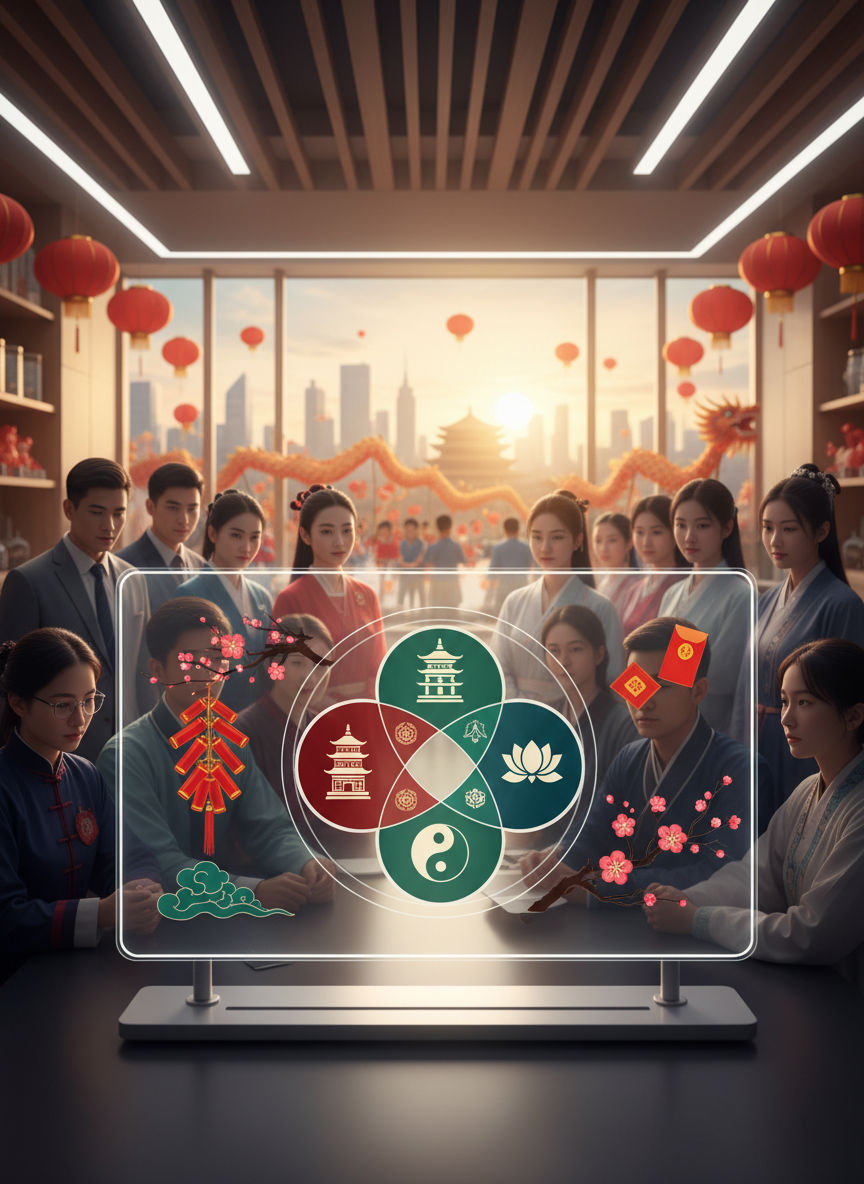
In the West, we often feel we must choose just *one* religion. In China, history tells a different story. Think of it like a diverse buffet where you pick the best from different worlds to find balance.
Most people blend three major teachings: Buddhism, Taoism, and Confucianism. Together, they are known as the "Three Teachings." Instead of competing, they complement each other perfectly in daily life.
You might meditate like a Buddhist in the morning to find inner peace, use Taoist Feng Shui for your home, and respect your elders following Confucian rules on the weekend.
It’s less about a single almighty god and more about practical wisdom, harmony, and ancestral respect. It is a fascinating and highly tolerant mix!
Key Takeaway
Chinese life is often a relaxed blend of multiple philosophies rather than one single religion.
Test Your Knowledge
What best describes China’s traditional approach to religion?
Two of the most influential teachings originated in China: Taoism and Confucianism. Though they sound like opposites, they are actually two sides of the same coin, creating a complete lifestyle.
Taoism is the relaxed side. It’s built on the principle of Yin and Yang, focusing on living in harmony with nature and "going with the flow." It’s the perfect philosophy for a weekend or when you need to destress.
Confucianism, on the other hand, is the "business suit." It’s all about society, order, and education. It teaches that respect is vital—especially toward parents, teachers, and grandparents.
Together, they create balance: Confucianism helps you succeed at school or work through discipline, while Taoism helps you clear your head during a quiet walk in the woods.
Key Takeaway
Taoism represents nature and flow, while Confucianism focuses on family and social rules.
Test Your Knowledge
What is the primary focus of Confucianism?
Now that we know the mindset, let’s celebrate! The most important event in China is the Chinese New Year, also known as the Spring Festival. Imagine Christmas, New Year’s, and a massive family reunion all at once!
The catch? The date changes every year because it follows the traditional Lunar Calendar. Usually, New Year’s Day falls somewhere between late January and mid-February.
When the festival arrives, something incredible happens: the world’s largest annual migration. Millions of people travel across the country simultaneously to make it home for the sacred reunion dinner with their families.
This New Year's Eve meal is essential. Families serve special "lucky" dishes, like dumplings (Jiaozi). These are shaped like ancient gold bars to symbolize wealth and prosperity for the coming year.
Key Takeaway
The Spring Festival is China's top family holiday, and its date follows the lunar calendar.
Test Your Knowledge
How is the date of the Chinese New Year determined?
Have you noticed a recurring color in Chinese New Year photos? It’s Red! Everything is decorated in crimson, from giant paper lanterns to intricate window cutouts. But why is this color so dominant?
An old legend tells of a monster named Nian who came down from the mountains to terrorize villagers. However, they discovered Nian hated two things: the color red and deafening noise!
That’s why families still decorate their homes in bright red and light firecrackers at midnight. It’s a symbolic way to scare away evil spirits and bad luck for the start of the new year.
For the younger crowd, there’s another highlight: Hongbao. These are small red envelopes filled with cash, given by married adults to children. They bring joy and are believed to guarantee prosperity for the future.
Key Takeaway
Red decorations and loud firecrackers are used to ward off bad luck and the monster Nian.
Test Your Knowledge
Why is red the traditional color for New Year decorations?
In the West, we have zodiac signs that change monthly, like Aries or Leo. The Chinese calendar works differently: an entire year is dedicated to a specific animal sign!
There are 12 zodiac animals that rotate in a fixed cycle, including the Rat, Dragon, Pig, Tiger, and Monkey. After twelve years, the cycle begins again. Each animal supposedly passes its traits to those born that year.
The Dragon, for example, is seen as brave and powerful, making Dragon years very popular for newborns. Conversely, those born in the Year of the Pig are considered honest, easy-going, and helpful.
This plays a role in daily life, too. During the New Year, many people check their horoscopes to see if the current year’s animal is a good match for their own birth sign and what fortunes await.
Key Takeaway
The Chinese zodiac features 12 animals, with each full year belonging to one specific creature.
Test Your Knowledge
How often does the Chinese zodiac sign change?
Track your progress, earn XP, and compete on leaderboards. Download NerdSip to start learning.