Why do you keep scrolling until 2 AM?
Prompted by A NerdSip Learner
Reclaim your time and mind.
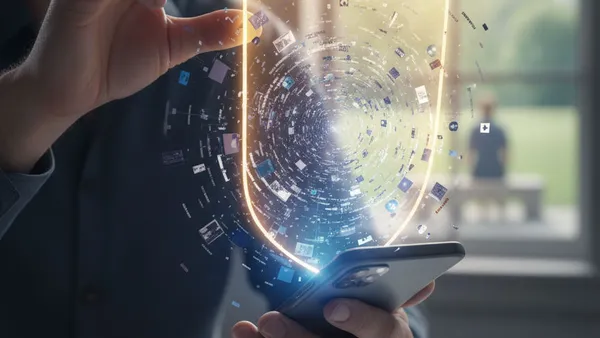
Have you ever found yourself staring at your phone at 2 AM, reading bad news even though it makes you feel terrible? You're not alone, and it's not actually your fault. This modern trap is called doomscrolling.
To understand why we do this, we have to look at our ancestors. Back in the caveman days, paying attention to danger was a matter of life and death. If you ignored a rustling bush, it might be a predator. Our brains developed a built-in negativity bias.
Today, there are no predators in our living rooms. But our brains still crave information about threats to keep us safe. Social media algorithms know this. They feed us an endless stream of negative news because it grabs our ancient brains by the collar.
You aren't broken for doomscrolling; your brain is just doing its ancient job in a very modern, unhelpful way. Recognizing this is the first step to breaking the spell.
Key Takeaway
Doomscrolling happens because our brains are evolutionarily wired to focus on negative information to keep us safe.
Test Your Knowledge
Why do our brains naturally focus on bad news?
Imagine sitting at a casino slot machine. You pull the lever, hoping for a jackpot. Most of the time you get nothing, but every once in a while, *ding ding ding!* You win. This unpredictability keeps you pulling the lever.
Your smartphone works exactly the same way. Every time you swipe down to refresh your feed, you are pulling the lever. You're looking for a 'jackpot'—an interesting post, a funny video, or a big news update.
Because you never know *when* the good stuff will appear, your brain releases a chemical called dopamine in anticipation. Dopamine is the molecule of craving. It makes you want to keep scrolling just one more time to see what's next.
Furthermore, modern apps use infinite scroll. There is no bottom of the page, meaning there is no natural stopping point. Your brain never gets the signal that the task is 'done,' leaving you trapped in the loop.
Key Takeaway
Apps keep you scrolling by using unpredictable rewards and removing natural stopping points.
Test Your Knowledge
What is the main psychological reason apps use 'infinite scroll'?
In our thirties, life is usually a juggling act of careers, relationships, and daily responsibilities. Time is one of our most precious resources. Yet, doomscrolling quietly steals hours of it every single week.
But it doesn't just steal time; it steals your peace of mind. Consuming a constant diet of disasters puts your nervous system into a mild state of fight or flight. Your heart rate might elevate slightly, and your breathing might become shallow.
This constant low-level stress is exhausting. When you doomscroll right before bed, it signals to your brain that the world is dangerous, which deeply disrupts your sleep quality.
You wake up tired, which lowers your willpower, making you more likely to doomscroll again the next day. Breaking out of this cycle means reclaiming both your time and your baseline level of calm.
Key Takeaway
Doomscrolling creates a cycle of stress and poor sleep that drains your energy for real life.
Test Your Knowledge
How does doomscrolling before bed physically affect you?
If you want to stop a car from speeding down a quiet street, you don't just put up a sign. You build a speed bump. To stop doomscrolling, we need to add friction to your phone habits.
Right now, opening your favorite app is too easy. It's an automatic muscle memory. You unlock your phone and tap the icon without even thinking about it. We need to disrupt that automatic reflex.
Start by moving your most addictive apps off your home screen. Hide them in a folder on the second or third page. This forces you to physically search for them, giving your brain a crucial second to pause and ask: *'Do I actually want to do this right now?'*
For an extra powerful speed bump, change your phone's screen to grayscale (black and white). Without bright, candy-colored notifications to trigger your dopamine, your phone suddenly becomes incredibly boring to look at!
Key Takeaway
Adding friction, like hiding apps or using grayscale, breaks the automatic reflex of opening your phone.
Test Your Knowledge
What is the primary purpose of moving apps off your home screen?
You've added speed bumps, and you understand the trap. But here is the golden rule of breaking any habit: You cannot just delete a behavior; you must replace it.
When you feel the urge to doomscroll, ask yourself what you are actually craving. Usually, it's not the news! You might be bored, anxious, avoiding a difficult work task, or just seeking a brief moment of distraction to decompress.
Prepare a list of healthy alternative snacks for your brain. If you have a free minute waiting in line, read one page of an eBook instead of checking social media. If you are stressed, try doing a 60-second breathing exercise or going for a short walk.
Keep a physical book on your nightstand instead of your phone charger. By replacing the bad habit with something genuinely nourishing, you take back control of your attention.
Key Takeaway
To successfully stop doomscrolling, you must replace the habit with a healthier, satisfying alternative.
Test Your Knowledge
Why is it important to have alternative activities ready?
Track your progress, earn XP, and compete on leaderboards. Download NerdSip to start learning.