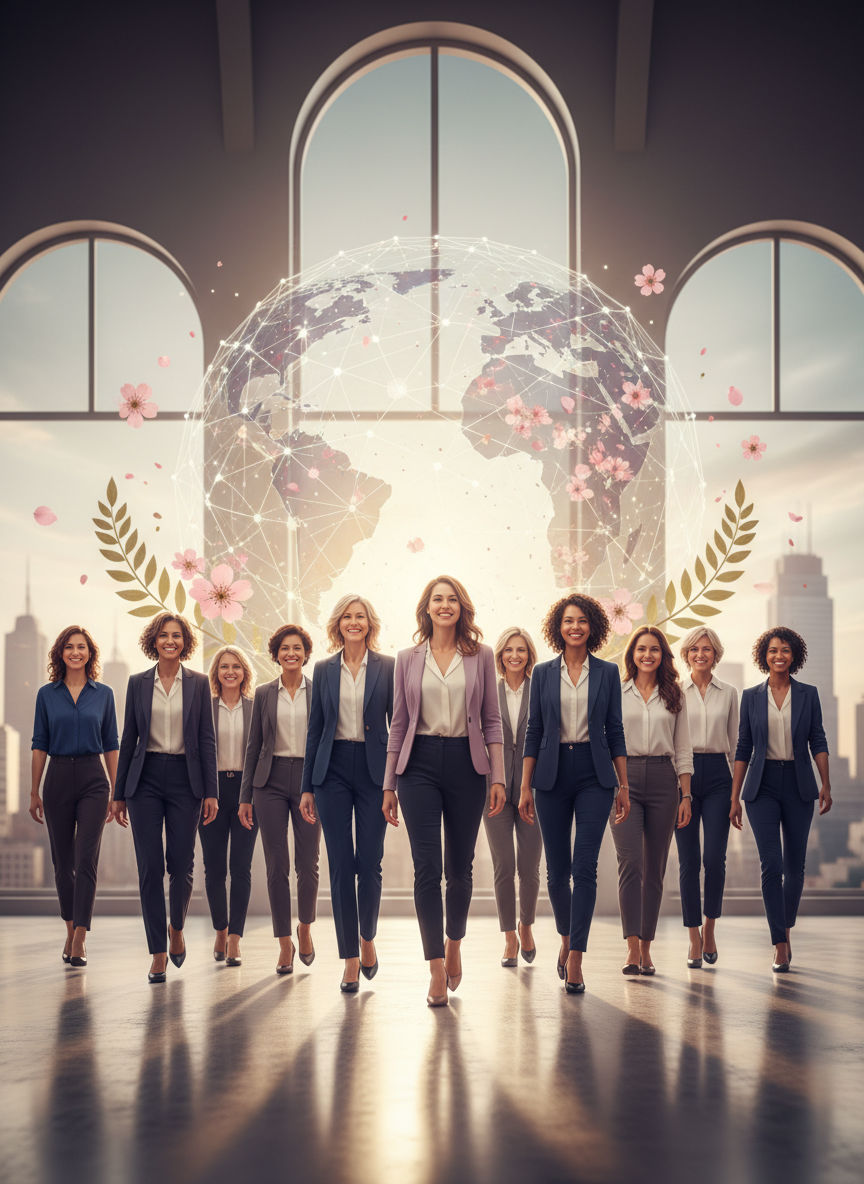
Ever wondered why we still need a global day for women?
Prompted by A NerdSip Learner
Uncover the radical history and real purpose behind March 8th.
Imagine living 100 years ago. In most countries, women are denied the right to vote. You work in grueling conditions, earning far less than any man for the same labor. It feels deeply unfair, doesn't it?
This injustice fueled many courageous women to speak up. One of the boldest voices was Clara Zetkin. She had a radical idea: what if women from all over the world united on one specific day to demand change?
The goal wasn't a celebration—it was a loud, collective protest. They demanded suffrage and safer workplaces. This sparked a global movement that fought for the rights we often take for granted today.
From this spark, a worldwide force was born. Women took to the streets to claim their place in society, proving that even the strongest systems can be challenged when people stand together.
Key Takeaway
International Women's Day began with brave protests by women fighting for their fundamental rights.
Test Your Knowledge
What was the original primary reason for International Women's Day?
Why do we mark our calendars for March 8th? Interestingly, the date wasn't fixed at the start. In the early years, the day was celebrated at various times depending on the country.
The modern date traces back to a pivotal moment in 1917. In the midst of war and hardship, thousands of female textile workers in Russia went on strike. Their powerful cry was for "Bread and Peace."
This strike was so influential that it triggered a massive political revolution. According to our modern calendar, that historic uprising began on March 8th.
To honor this incredible display of female power, the date became the permanent anchor for International Women's Day. It serves as a yearly reminder that collective action creates real change!
Key Takeaway
The date of March 8th commemorates a historic and courageous strike by Russian workers.
Test Your Knowledge
Where does the final date of March 8th come from?
For decades, International Women's Day was primarily a grassroots effort within the labor movement. It wasn't yet a recognized global event. That shifted significantly as the years went on.
The major turning point came in 1975. The United Nations (UN)—an assembly of almost every country on Earth—declared it the "International Women's Year."
During this time, the UN officially designated March 8th as a worldwide day for women's rights. This was a massive victory. What started as a localized protest had officially evolved into a global mission.
Today, the day is recognized in almost every country. In some places, it’s even a public holiday. It has become a powerful bridge connecting people across all borders in the shared pursuit of equality.
Key Takeaway
In 1975, the United Nations officially recognized March 8th as a global day of action for women's rights.
Test Your Knowledge
What changed for International Women's Day in the 1970s?
You’ve likely seen women receiving flowers or chocolates on March 8th. In many cultures, this has become a popular tradition to say "thank you." While it’s a kind gesture, it’s also met with criticism.
Why the pushback? Because International Women’s Day was never meant to be a second Mother’s Day or Valentine’s Day. It began with hard political demands: equal pay, safety, and justice.
A bouquet of roses doesn't fix systemic inequality. Many activists today emphasize a clear message: "We don't want flowers; we want equality and respect."
This day is meant to highlight ongoing struggles and demand structural change. It’s a time to focus on progress and human rights, rather than just handing out gifts.
Key Takeaway
International Women's Day is a day of advocacy for rights and equality, not just a gift-giving holiday.
Test Your Knowledge
Why do some people criticize giving flowers on International Women's Day?
Some argue that since women have the same rights on paper, the day is no longer needed. However, reality often tells a different story. True equality has yet to be reached globally.
The "Gender Pay Gap" remains a harsh reality, with women often earning less for the same work. Additionally, women are still significantly underrepresented in top political and corporate leadership roles.
In many parts of the world, basic rights like education and personal autonomy are still denied to girls. This makes the day just as vital now as it was a century ago.
International Women's Day acts as a megaphone for those still being silenced. It reminds us that while we’ve come far, the journey toward a truly fair world is still ongoing.
Key Takeaway
True equality has not yet been achieved worldwide, which is why International Women's Day remains crucial.
Test Your Knowledge
What is a modern reason why International Women's Day remains important?
Track your progress, earn XP, and compete on leaderboards. Download NerdSip to start learning.