I used to think I was pretty self-aware. I could recognize when I was stressed. I knew my strengths and weaknesses. I understood what triggered me.
Turns out, I was completely wrong.
The moment I realized this was during a performance review. My manager said I came across as dismissive during team discussions. I was shocked. Dismissive? Me? I thought I was just being direct and efficient.
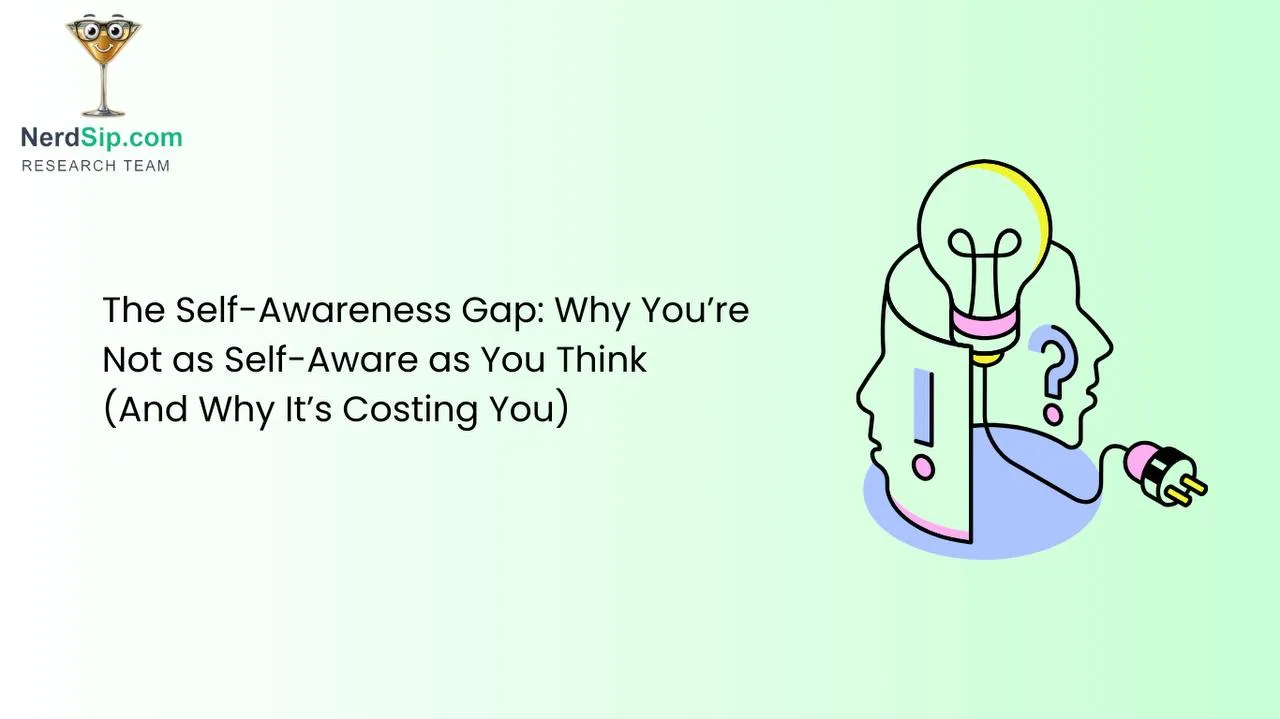
That's when it hit me: there's a massive difference between thinking you're self-aware and actually being self-aware.
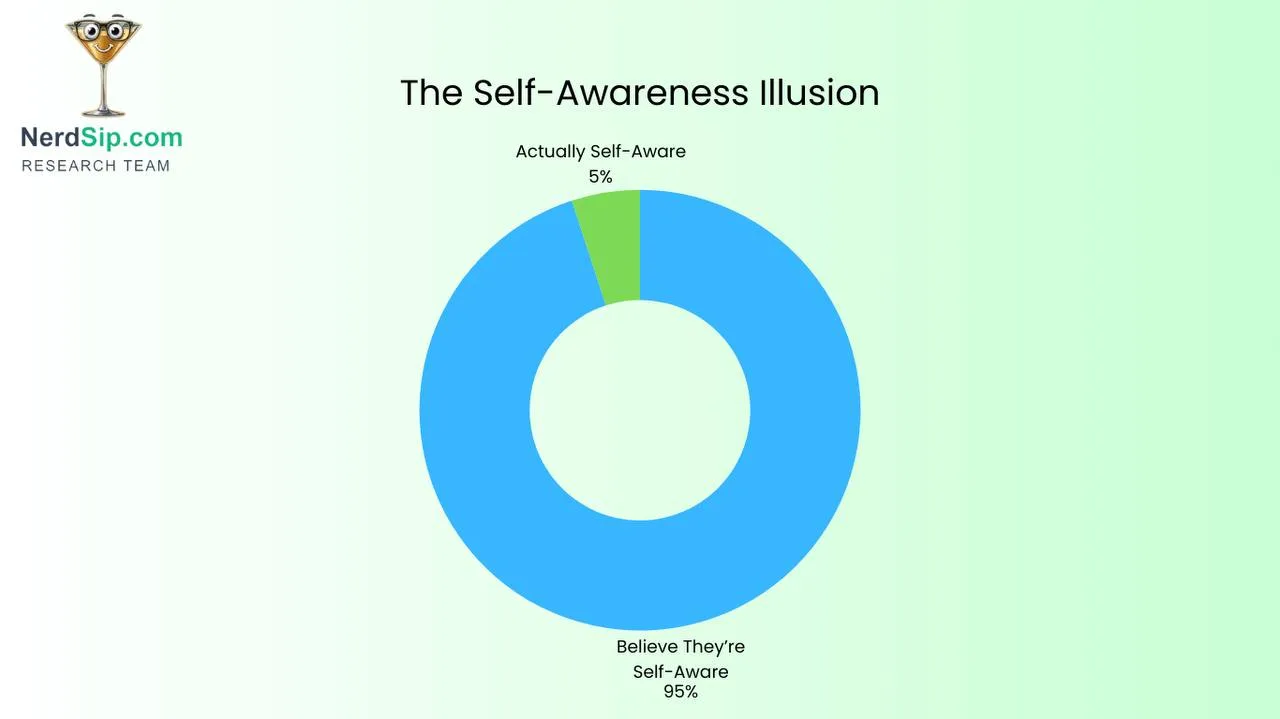
And I'm not alone in this delusion. Research shows that while 95% of people believe they're self-aware, only 10-15% actually are. That means roughly 80-85% of us are walking around with a fundamentally flawed understanding of who we are and how we impact others.
This isn't just embarrassing. It's expensive. Lack of self-awareness derails careers, destroys relationships, and keeps you stuck in the same patterns year after year while wondering why nothing changes.
What Self-Awareness Actually Means (Spoiler: It's Not What You Think)
Most people confuse self-awareness with self-reflection. They're not the same thing.
Self-reflection is thinking about yourself. Self-awareness is accurately perceiving yourself—including the parts you'd rather ignore. That's where measurement helps: a free Big Five personality test gives you a scored profile of your traits instead of another round of introspection.
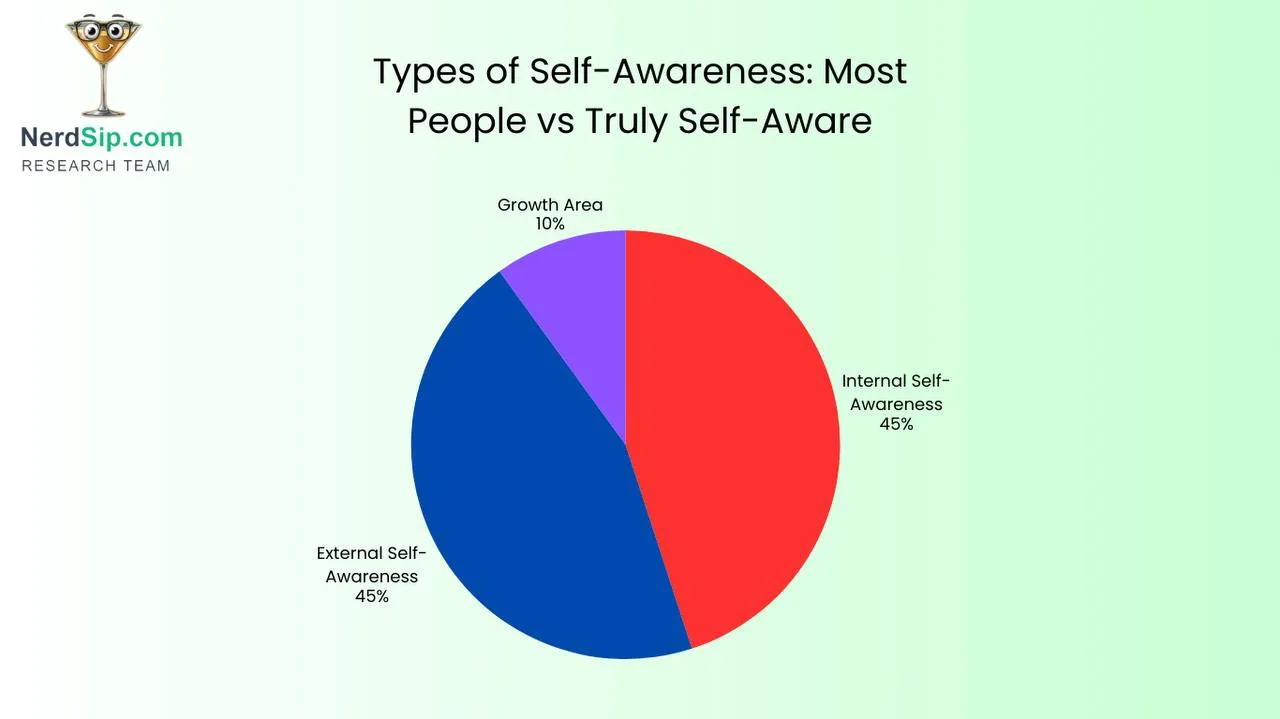
There are two types of self-awareness, and most people only have one (if that):
Internal self-awareness is how clearly you see your own values, passions, reactions, and impact on others. It's the ability to think: "I'm getting defensive right now because this criticism touches on my insecurity about not being smart enough."
External self-awareness is understanding how other people see you. It's recognizing the gap between your intentions and your impact.
Here's the problem: you can have high internal self-awareness (you know yourself well) but low external self-awareness (you have no idea how you're actually coming across). And that gap? That's where most of your problems live.
Why Smart People Struggle with Self-Awareness the Most
You'd think intelligent, accomplished people would be MORE self-aware. The data says otherwise.
The higher you climb professionally, the less accurate your self-perception becomes. Why? Because the more successful you are, the less honest feedback you receive.
People stop telling you the truth. They start managing you instead. Your blind spots grow larger while your confidence that you're self-aware grows stronger.
The Cost of the Self-Awareness Gap
Let me be blunt: lack of self-awareness is quietly sabotaging your life in ways you don't even recognize.
Career-wise: You keep getting passed over for promotions but don't understand why. You think you're a strong communicator. Your colleagues think you don't listen. You believe you're collaborative. Your team finds you controlling.
Relationship-wise: You wonder why your friendships feel shallow or why romantic relationships never work out. You think you're supportive. Others experience you as judgmental.
The Brutal Exercises That Actually Build Self-Awareness
The "How Am I Showing Up?" Daily Check-In
Most people reflect on what they did. Self-aware people reflect on how they did it. After any significant interaction, ask yourself:
- What was I trying to accomplish?
- How did I actually come across?
- What emotions was I feeling?
- How might others have interpreted my behavior differently?
The Feedback Loop
Ask people for honest feedback about your blind spots. Not vague questions, but specific ones: "What's one thing I do that makes collaboration harder?"
The Emotion-Behavior Connection Map
Next time you notice yourself reacting strongly, trace it backwards from Behavior to Thought to Emotion to Trigger to Deeper belief.
The Things Self-Aware People Do Differently
- They apologize more: They notice when their impact doesn't match their intention.
- They ask clarifying questions: They check their perceptions against reality.
- They own their triggers: Naming the emotion defuses it.
- They're comfortable saying "I was wrong": They treat mistakes as data for course correction.
Why Self-Awareness Is the Foundation for Everything Else
Developing self-awareness makes you better at everything. Better leader, better partner, better communicator, better decision-maker. You can't improve what you can't see.
Supercharge Your Self-Awareness
The most important thing you can learn is yourself. NerdSip helps you build self-knowledge through 5-minute daily micro-lessons on emotional intelligence, cognitive biases, and communication patterns.
Get the App