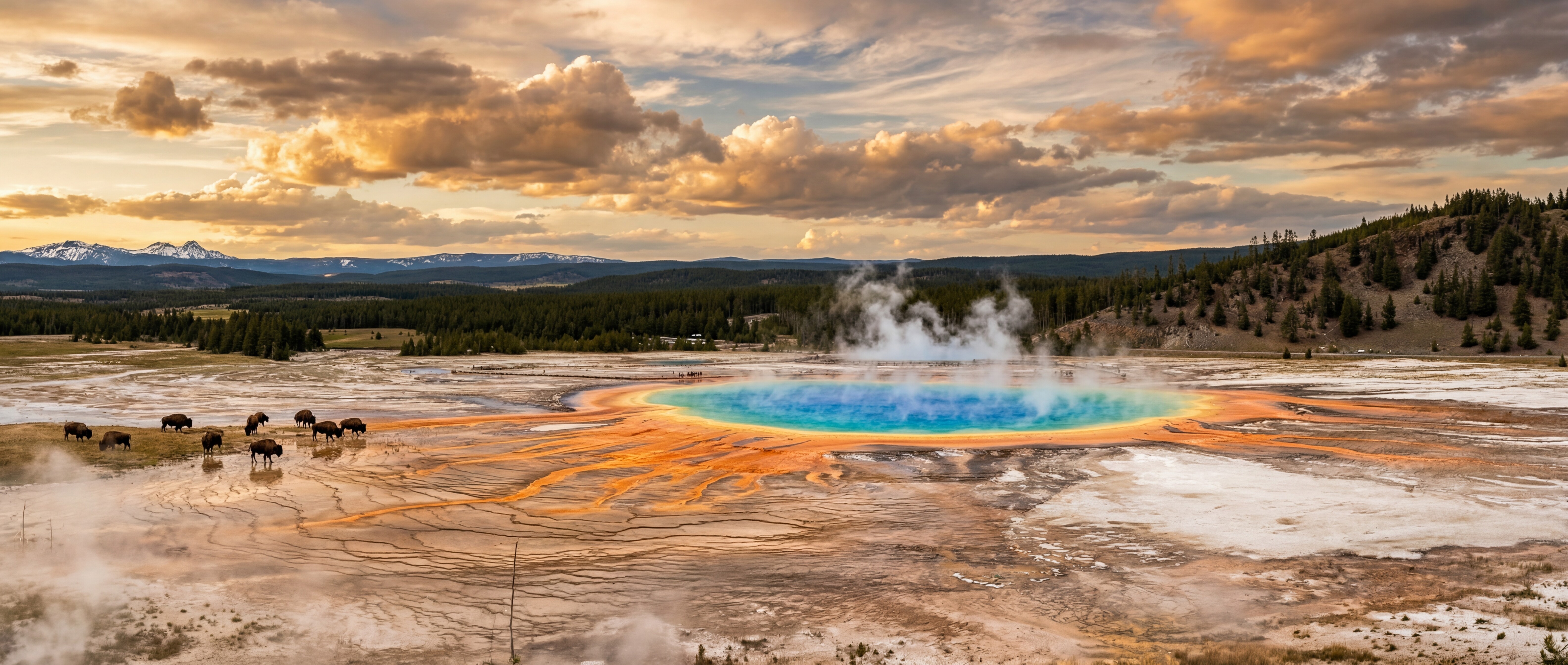
The Sleeping Giant
You are standing on a magma chamber large enough to fill the Grand Canyon eleven times over. Beneath the meadows, the bison herds, the forests of lodgepole pine, a supervolcano breathes. Yellowstone is not just a national park. It is a geological engine, and it is still running.
640,000 Years Ago
The last major eruption blanketed half of North America in ash. It ejected 240 cubic miles of rock and dust into the atmosphere. It carved a caldera 45 miles wide. The earth remembers. Old Faithful still erupts every 90 minutes, as if keeping time for the planet itself. Mud pots hiss and bubble. Fumaroles exhale steam. The ground in some areas rises and falls by inches each year, breathing with the magma below.
Life on the Edge
Wolves hunt elk through winter valleys at dawn. Grizzlies fish for cutthroat trout in streams warmed by geothermal vents. And in the scalding hot springs, thermophilic bacteria paint rings of orange, yellow, and emerald green. These organisms are so ancient they predate complex life on Earth. They also gave scientists the enzyme Taq polymerase, which made PCR possible, unlocking DNA replication and modern genetics. Life does not just survive at Yellowstone. It rewrites the rules.
Wonder Never Sleeps
Yellowstone reminds us of something we forget too easily. The earth is alive. Restless. Magnificent beyond anything we have built upon it. And it is full of stories that reward the curious.
Want more rabbit holes?
NerdSip delivers bite-sized wonders to your phone. Every day.