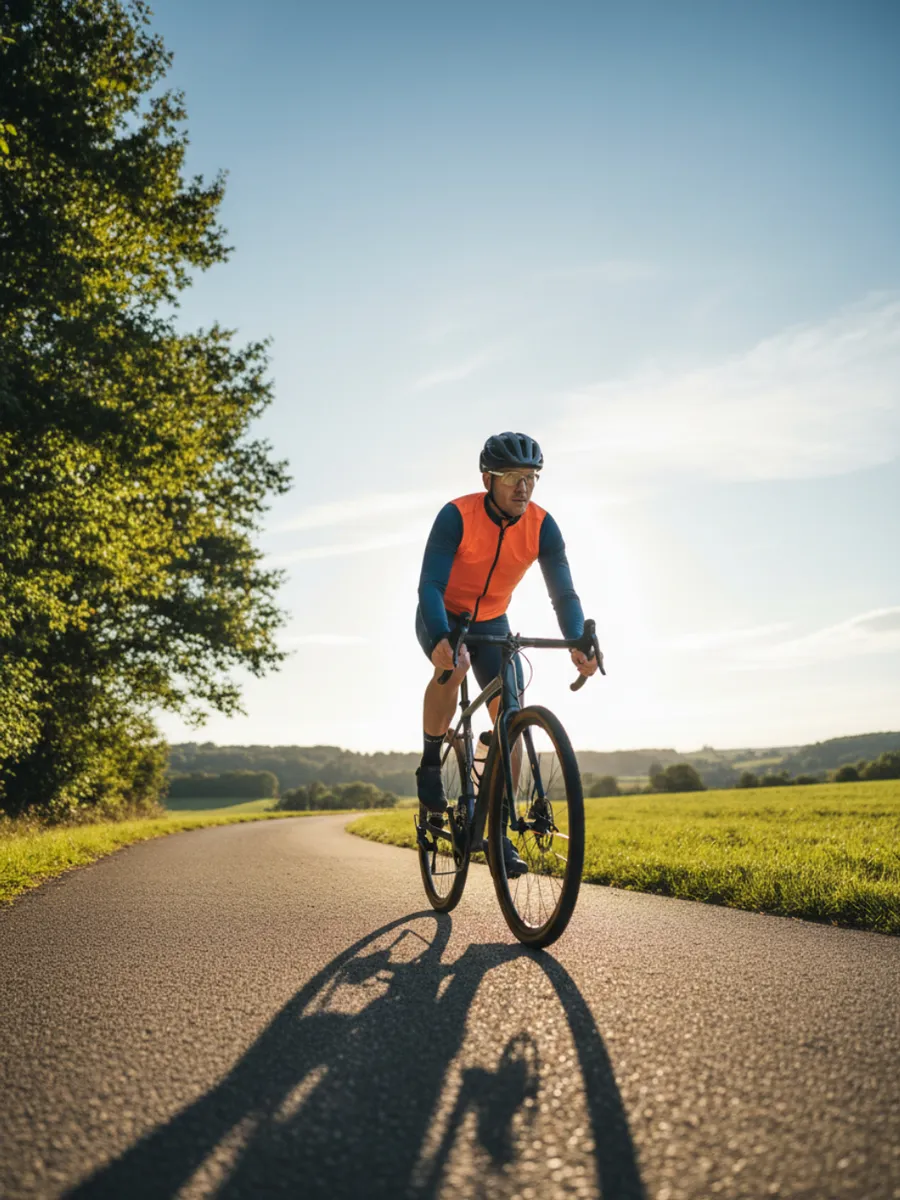
Is the only thing keeping you off two wheels your age?
Prompted by A NerdSip Learner
Master two wheels and ride solo in five lessons.
Welcome to the start of your cycling journey! I know it can feel a bit intimidating to learn as an adult, but we are going to make this safe and stress-free. The first secret isn't about balance at all; it's about your setup. Before you even try to move, we need to adjust your bike seat (the saddle). For learning, lower it all the way down so that when you sit on it, both of your feet are completely flat on the ground. This is your safety net.
Think of this like lowering the difficulty setting in a video game. Being able to plant your feet instantly means you can't fall over. Next, strap on that helmet. It should be snug, sitting level on your head just above your eyebrows—not tilted back like a fedora! Once you feel secure and your feet are grounded, you've conquered the hardest part: the fear of falling.
Key Takeaway
Lower your seat until feet are flat on the ground to build confidence and eliminate the risk of falling.
Test Your Knowledge
For your very first lesson, how should your bike seat be positioned?
Forget about the pedals for a moment. In fact, if you have a wrench, you could even take them off! Today, we are going to treat your bicycle like a giant scooter. With your seat low and your feet on the ground, I want you to simply walk the bike forward while sitting on it. Push off with both feet, glide for a second, and put them down. We call this 'scooting.'
Imagine you are a duck paddling in water. Push, glide, push, glide. Do not look down at the handlebars or the front wheel; looking down throws off your equilibrium. Instead, look straight ahead at the horizon, like you're walking down the street. As you get comfortable, try to push a little harder so you glide for two or three seconds with your feet hovering just an inch off the ground. That feeling? That's balance!
Key Takeaway
Use your feet to push and glide without pedals to teach your brain how to balance naturally.
Test Your Knowledge
Where should your eyes be focused while you practice scooting?
Now that you've mastered the scoot, it's time to find the magic ingredient: speed. It sounds counterintuitive, but a bike is actually much more stable when it's moving fast than when it's moving slow. It's simple physics! When the wheels spin, they want to stay upright. Moving too slowly makes the bike wobble, like a spinning top that is losing energy.
Find a gentle, grassy slope or a long flat stretch of pavement. Push off hard with your feet to get a good rolling speed, and then lift your feet up and place them on the pedals (don't pedal yet, just rest them there). Count to five. If you feel a wobble, don't panic—just steer slightly into the direction you are falling, or put your feet down. Trust the bike's momentum to hold you up. You are flying now!
Key Takeaway
A moving bike balances itself; trust your speed to keep you upright.
Test Your Knowledge
Why is it easier to balance when moving faster?
You can glide with your feet up, so now let's turn you into the engine. The trickiest part of riding is the very first second—getting moving from a standstill without wobbling. We use a technique called the 'Power Launch.' Raise one pedal (your dominant foot) to the 2 o'clock position—that's high up and forward, ready to be pushed down.
Stand over the bike with one foot on the ground and the other on that high pedal. Take a deep breath, look forward, and push down hard on that pedal. This single push gives you the momentum you need to glide immediately. Once you are rolling, find the other pedal with your other foot and start rotating your legs in circles. If you feel unsteady, just pedal a little faster. Remember: momentum is your best friend!
Key Takeaway
Start with your dominant pedal at the 2 o'clock position to generate immediate speed and stability.
Test Your Knowledge
What is the 'Power Launch' position for your starting pedal?
You are riding! Now, let's make sure you can stop and steer safely. For steering, beginners often try to turn the handlebars drastically, which causes crashes. Instead, think of steering as a subtle lean. Look with your eyes where you want to go, and your body will naturally lean the bike that way. It's almost telepathic!
For stopping, get to know your brakes. You usually have two levers on the handlebars. Squeeze them both gently at the same time—imagine you are squeezing an open tube of toothpaste and you don't want to make a mess. Never slam them fast! As you slow down to a stop, slide your hips forward off the seat and put a foot down flat on the ground. You did it! You're officially a cyclist.
Key Takeaway
Steer by looking where you want to go, and brake by gently squeezing both levers like a tube of toothpaste.
Test Your Knowledge
What is the best way to apply the brakes?
Track your progress, earn XP, and compete on leaderboards. Download NerdSip to start learning.