Are tiny microbes in your gut secretly controlling your mood?
Prompted by A NerdSip Learner
Understand your gut-brain connection.
Let's start with a wild fact: you're not just you. Your body is home to trillions of microorganisms, including bacteria, viruses, and fungi, mostly living in your gut. This bustling community is called the gut microbiome, and it's so significant that scientists sometimes refer to it as a 'forgotten organ'.
Think of your gut as a complex, thriving ecosystem, like a rainforest. In a healthy microbiome, different species live in balance, each playing a role in your digestion, immune system, and more. It’s not about 'good' vs. 'bad' bacteria, but about having a rich diversity of different types.
This inner world is unique to you, like a fingerprint. It's shaped by your genetics, your diet, your environment, and your lifestyle. Understanding this ecosystem is the first step to understanding how it can have such a powerful influence on your entire body, including your brain.
Key Takeaway
Your body hosts a vast and unique community of microorganisms called the microbiome, which acts like a hidden organ.
Test Your Knowledge
What is the community of microorganisms living in your gut called?
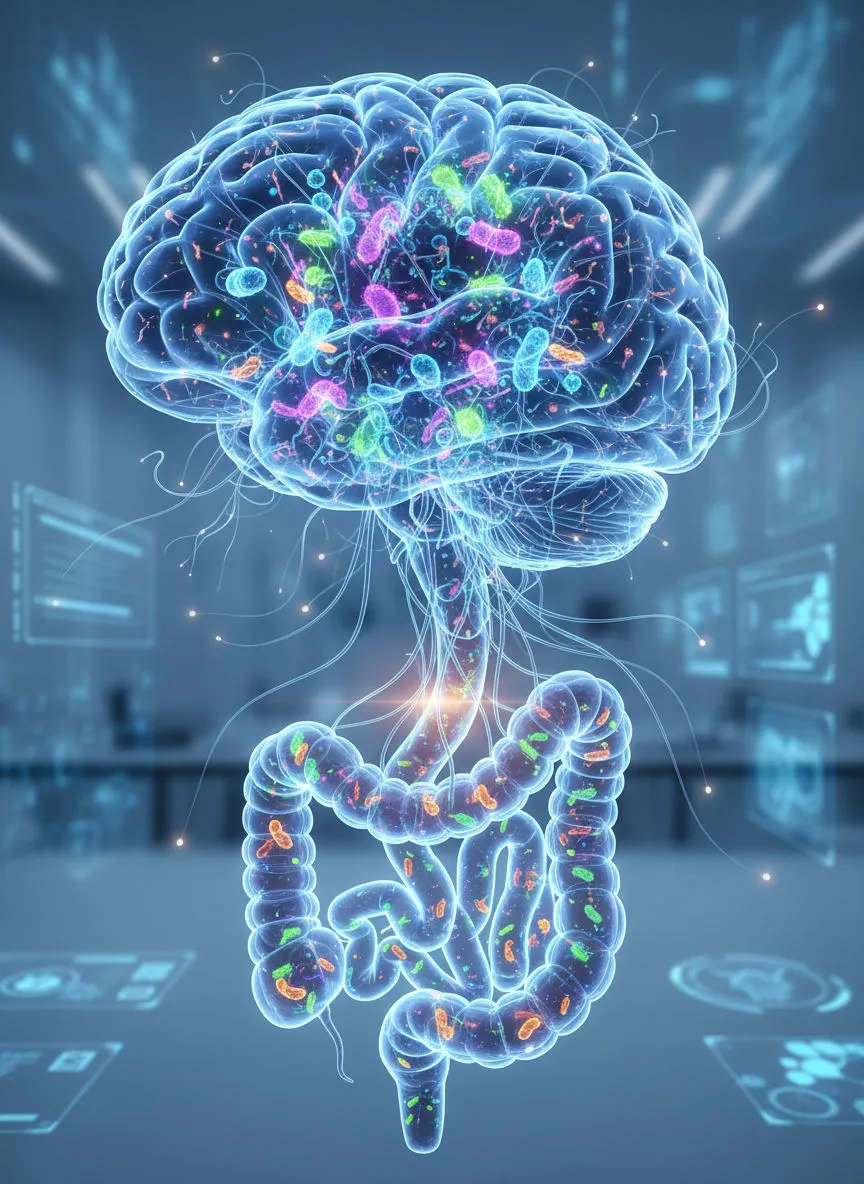
So, how does a microbe in your gut send a message to your brain? One of the main ways is through a physical connection: the vagus nerve. Think of it as a superhighway or a fiber-optic cable running directly between your gut and your brain.
This isn't a one-way street. The vagus nerve sends information up from the gut to the brain, and down from the brain to the gut. It’s a constant, two-way conversation. For example, feelings of anxiety can trigger stomach issues (brain-to-gut), while a troubled gut can send signals that contribute to feelings of stress (gut-to-brain).
This pathway is incredibly fast. The signals transmitted along this nerve can influence your mood, stress response, and even memory. It's one of the most direct and powerful demonstrations of how deeply your physical and mental health are intertwined.
Key Takeaway
The vagus nerve acts as a two-way communication superhighway, directly linking your gut and brain.
Test Your Knowledge
What is the primary role of the vagus nerve in the gut-brain axis?
Have you heard of serotonin? It’s often called the 'happy chemical' because it plays a huge role in mood, well-being, and happiness. You might think it's all produced in the brain, but here's the shocker: a vast majority, some estimates suggest over 90%, of your body's serotonin is made in your gut!
Your gut bacteria are key players in this process. They help trigger the gut cells to produce this crucial neurotransmitter. Neurotransmitters are chemical messengers that your nervous system uses to transmit information. So, the balance of bacteria in your gut can directly impact the levels of mood-regulating chemicals available in your body.
This is why an imbalance in gut bacteria, sometimes called 'dysbiosis', is increasingly being linked by researchers to mood disorders like anxiety and depression. A happy gut can literally be the foundation for a happier mind.
Key Takeaway
Your gut bacteria are essential for producing the vast majority of your body's serotonin, a key chemical for regulating mood.
Test Your Knowledge
Which important mood-regulating chemical is primarily produced in the gut?
Ever had a food craving that felt impossible to resist? It might not have been just 'you' who wanted it. Your gut microbes have their own dietary preferences, and they've developed clever ways to get you to eat what *they* want.
Different species of bacteria thrive on different types of food. Some love sugar and processed fats, while others flourish on fiber from vegetables and legumes. To survive and multiply, these bacteria can release substances that influence your brain, affecting your mood and your food choices.
When a population of sugar-loving bacteria is thriving, they can send signals up to your brain that make you crave more sugary treats. It's a survival mechanism for them! The more you feed them, the stronger they get, and the more you crave what they want. It’s a powerful feedback loop that can shape your entire diet.
Key Takeaway
Your gut bacteria can directly influence your food cravings by sending signals to your brain to get the nutrients they need to survive.
Test Your Knowledge
According to the lesson, how might gut bacteria influence your diet?
The good news is you have the power to influence your microbiome for the better. Think of it like gardening. You want to plant good seeds and provide the right fertilizer to help them grow. In your gut, this means focusing on probiotics and prebiotics.
Probiotics are the 'good seeds'. They are live beneficial bacteria found in fermented foods like yogurt (with live cultures), kefir, kimchi, sauerkraut, and kombucha. Adding these to your diet can introduce helpful new members to your gut community.
Prebiotics are the 'fertilizer'. They are a type of fiber that your body can't digest, but your good gut bacteria love to eat. Foods rich in prebiotics include garlic, onions, bananas, asparagus, and whole grains. Eating these feeds the beneficial microbes you already have, helping them thrive.
By regularly including both probiotic and prebiotic foods in your diet, you can actively cultivate a diverse and healthy inner garden, which in turn supports a healthier, happier you.
Key Takeaway
You can improve your gut health by eating probiotic foods (live bacteria) and prebiotic foods (fiber that feeds them).
Test Your Knowledge
What is the key difference between probiotics and prebiotics?
Track your progress, earn XP, and compete on leaderboards. Download NerdSip to start learning.