What did elegant tea parties and giant steam engines have in common?
Prompted by NerdSip Explorer #5570
Master the era of Austen and industry.
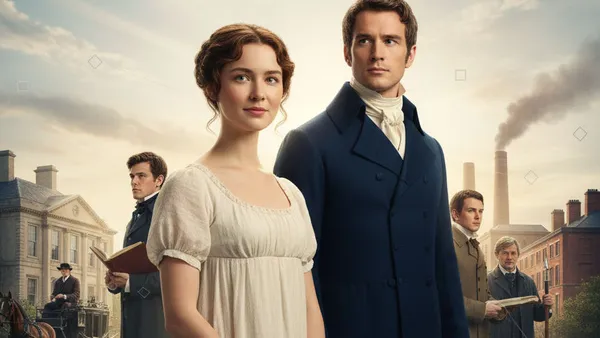
Imagine living in a world where your main job is going to parties. For the ultra-rich of early 19th century England, this was reality! This period is famously known as the Regency Era.
Why "Regency"? In 1811, King George III became too ill to rule. His son stepped in to act as his proxy, or Prince Regent. The Prince loved luxury, fashion, and endless entertainment, setting a wildly lavish trend for the upper class.
During this time, the wealthy spent their days following strict rules of etiquette. How you bowed, who you danced with, and even how you held your fan could make or break your social standing. It was the world of grand country estates and glamorous London balls.
But this dazzling lifestyle was a tiny bubble. While the elite were sipping tea and finding wealthy spouses, the rest of the country was about to experience a massive, gritty transformation that would change the world forever.
Key Takeaway
The Regency Era was a brief, highly glamorous period driven by strict social rules and luxury for the super-rich.
Test Your Knowledge
What does "Regency" refer to in this era?
While the wealthy were dancing, the rest of England was going to work. The early 19th century was the exploding heart of the Industrial Revolution.
Before this, most people lived on farms and made things by hand. But suddenly, clever inventors created giant, steam-powered machines. These machines could spin cotton and forge iron a hundred times faster than human hands ever could.
To house these massive machines, huge factories were built. People flocked from the quiet countryside to new, crowded cities to find jobs. The air filled with thick, black smoke from burning coal, and the sound of hammering metal became the new soundtrack of the nation.
This shift completely transformed how humans lived. It created a brand new "middle class" of business owners, but it also meant grueling, dangerous work for everyday people. The world had officially shifted from the slow rhythm of the seasons to the rapid ticking of the factory clock.
Key Takeaway
The Industrial Revolution replaced hand-crafting with steam-powered machines, moving people from farms to crowded factory cities.
Test Your Knowledge
What powered the massive new machines of the early 19th century?
So, how do we remember this era today? Mostly through the eyes of one of history's greatest writers: Jane Austen.
Austen wrote famous novels like *Pride and Prejudice* during this exact time. Her books beautifully capture the romantic dramas, witty conversations, and intense social pressures of the wealthy English elite. They are basically the 19th-century version of reality TV!
However, Austen’s lovely world of drawing-room gossip sat right next to the gritty, smoke-filled reality of the industrial workers. These were literally two different Englands sharing the same island. The wealthy enjoyed unprecedented luxury, while the poor faced incredibly harsh living conditions.
Understanding early 19th century England means holding both of these pictures in your head at once. It was a time of beautiful poetry, elegant fashion, and brilliant inventions, but also a time of deep inequality and rapid, dizzying change.
Key Takeaway
The era was sharply divided between the elegant, wealthy society captured by Jane Austen and the gritty reality of the working class.
Test Your Knowledge
Which famous author is known for writing about the social lives of the wealthy during this time?
Track your progress, earn XP, and compete on leaderboards. Download NerdSip to start learning.