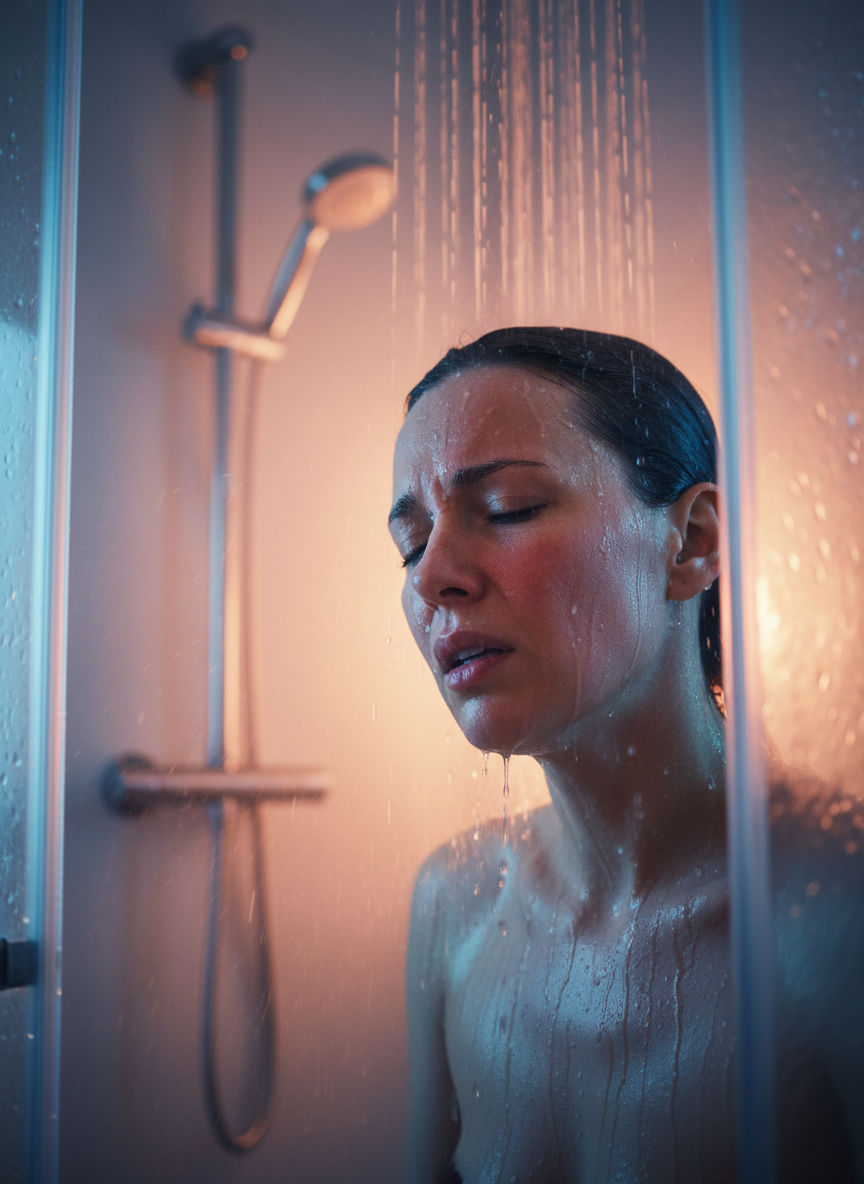
Is your relaxing morning ritual actually aging your skin? Let's fix that.
Prompted by A NerdSip Learner
Master the secrets to hydrated skin through smarter showering.
Think of your skin like a high-quality leather jacket. To keep it soft and flexible, it needs a light coating of oil. Your body produces this naturally—it’s a waxy substance called sebum. Sebum acts as a waterproof seal, keeping moisture locked inside your skin cells.
Here is the problem: Hot water acts like a heavy-duty degreaser. Just like hot water melts butter off a dinner plate, a steaming shower melts away your precious sebum. Without this oily shield, your skin is left 'naked' and vulnerable to the environment.
When you strip these oils too frequently, your skin doesn't just get dry; it can actually go into 'overdrive' trying to replace them, sometimes leading to unexpected oiliness or breakouts. It’s a delicate balance that high heat easily destroys.
Key Takeaway
Hot water melts away sebum, the natural oil that acts as your skin's built-in moisturizer.
Test Your Knowledge
What is the name of the natural waxy oil that hot water strips away?
Your skin's outermost layer, the stratum corneum, is your body's first line of defense. It’s made of tough cells held together by fats. High heat doesn't just remove surface oil; it actually disrupts the 'glue' holding these cells together, creating microscopic cracks in your skin barrier.
Through these tiny cracks, something called Transepidermal Water Loss (TEWL) occurs. This is a fancy way of saying the water inside your body literally evaporates into the air. This is why your skin feels tight and itchy immediately after a hot shower—it is effectively dehydrating from the inside out.
Furthermore, hot water causes vasodilation, which means your blood vessels expand. While this creates a 'rosy glow' initially, it can trigger inflammation and worsen conditions like eczema or rosacea by flooding the skin with heat it can't quickly dissipate.
Key Takeaway
Heat creates microscopic cracks in your skin barrier, allowing internal moisture to evaporate.
Test Your Knowledge
What does TEWL stand for in skincare?
You don’t have to take freezing showers to be healthy! Dermatologists recommend a 'Goldilocks' temperature: lukewarm. This is typically between 98°F and 105°F (roughly body temperature). If your skin is turning red, the water is definitely too hot.
To save your skin, try the '3-Minute Rule.' Within three minutes of stepping out of the shower, pat your skin dry (don't rub!) and apply moisturizer while your skin is still slightly damp. This 'traps' the remaining surface water into your skin before it can evaporate.
By lowering the temp and timing your moisturizing, you support your skin's natural repair cycle. You'll notice less itching, fewer dry patches, and a much more resilient skin texture in as little as one week. Your skin is a living organ—treat it with a little coolness and it will thank you!
Key Takeaway
Switch to lukewarm water and moisturize within three minutes of exiting to lock in maximum hydration.
Test Your Knowledge
What is the best time to apply moisturizer for maximum effectiveness?
Track your progress, earn XP, and compete on leaderboards. Download NerdSip to start learning.