How did an 'arranged marriage' spark a 30-year African war?
Prompted by NerdSip Explorer #5918
Understand the historic split of Ethiopia and Eritrea.
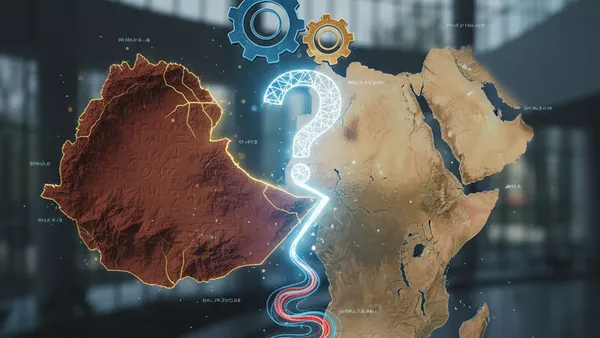
Eritrea and Ethiopia are neighbors located in the Horn of Africa. For centuries, they shared deep cultural and historical roots. For example, both share a love for *injera* (a sour, spongy flatbread) and possess rich, ancient religious traditions.
But in the late 1800s, everything changed when European powers began carving up the African continent. Italy claimed the northern coastal region—Eritrea—as its own colony. They built Italian-style cities, roads, and factories. Meanwhile, Ethiopia famously fought off European control and remained a fiercely independent ancient empire.
Because they were governed entirely differently for decades, the two populations naturally developed distinct political and social identities. While Ethiopia held tightly to its ancient imperial traditions, Eritrea was shaped by a completely different colonial experience.
This differing history sowed the very first seeds of separation. When you have two neighboring regions that grow up under entirely different rules, merging them later becomes incredibly complicated!
Key Takeaway
Italian colonization gave Eritrea a separate historical identity from its historically independent neighbor, Ethiopia.
Test Your Knowledge
Why did Eritrea and Ethiopia develop such distinct identities starting in the late 1800s?
After World War II ended, Italy was defeated and lost all of its overseas colonies. The United Nations was suddenly tasked with deciding what to do with a newly freed Eritrea.
In 1952, the UN decided on a compromise: they would federate (join) Eritrea with Ethiopia. You can think of this agreement like a politically arranged marriage. Ethiopia, which is entirely landlocked, desperately wanted Eritrea because it provided crucial, highly valuable access to the Red Sea.
Under this UN agreement, Eritrea was supposed to keep its own local government, its own parliament, and its own flag. Ethiopia would merely handle the big stuff, like national defense and foreign affairs.
On paper, it sounded like a beautifully fair balance of power. But forced marriages rarely work out perfectly in politics. Tensions began to simmer almost immediately as the larger, more powerful Ethiopian government began eyeing total control.
Key Takeaway
The UN awkwardly joined Eritrea and Ethiopia together in 1952, with Eritrea meant to keep its own local autonomy.
Test Your Knowledge
Why was Ethiopia so eager to be joined with Eritrea in 1952?
The "arranged marriage" designed by the UN quickly started to fall apart. Ethiopia’s powerful ruler, Emperor Haile Selassie, slowly began chipping away at Eritrea’s promised freedoms.
First, the Ethiopian government banned Eritrean languages from being taught in local schools, forcing everyone to learn Amharic (the primary Ethiopian language). Then, they forced the lowering of the Eritrean flag.
Finally, in 1962, the ultimate breaking point arrived. The Emperor completely dissolved the UN federation. He legally erased Eritrea's autonomy, officially absorbing the territory as just another province of the massive Ethiopian Empire.
Imagine having your local laws, language, and entire political identity erased overnight by a distant capital. For the Eritrean people, this blatant violation of the original UN agreement was entirely unacceptable. This sudden loss of autonomy was the exact spark that ignited a massive, decades-long rebellion.
Key Takeaway
In 1962, Ethiopia completely erased Eritrea's promised autonomy and absorbed it as a province, triggering a massive rebellion.
Test Your Knowledge
What was the 'breaking point' that officially ignited the Eritrean rebellion in 1962?
The erasure of Eritrea's autonomy officially launched the Eritrean War of Independence. It was a brutal, grueling conflict that lasted an astonishing thirty years, stretching from 1961 all the way to 1991.
This war was the ultimate David versus Goliath story. Eritrean rebel fighters—operating largely out of rugged, harsh mountain terrain in the north—had to fight off the massive, heavily armed Ethiopian military.
To make matters worse for the rebels, the Ethiopian government eventually became backed by the Soviet Union, receiving billions of dollars in advanced weapons, helicopters, and tanks.
Yet, the Eritrean fighters used brilliant guerrilla tactics. To survive constant bombings, they built elaborate underground hospitals and schools. They also heavily relied on fierce women fighters on the front lines. Despite facing overwhelming odds, the rebels slowly gained ground, forging an unbreakable sense of national unity.
Key Takeaway
Eritrean rebels fought an incredible 30-year guerrilla war against a much larger, heavily armed Ethiopian military.
Test Your Knowledge
How did the Eritrean rebels manage to survive their 30-year war against a massive military?
By the late 1980s, the tide of the war finally turned. The Eritrean fighters had formed a strategic alliance with internal Ethiopian rebels, who were also fighting to overthrow their own oppressive, Soviet-backed government.
In 1991, these combined rebel forces successfully marched into the capital and toppled the Ethiopian regime. The grueling 30-year war was finally over!
But the story doesn't end there. To make the split official and strictly legal on the world stage, a peaceful, UN-backed referendum was held in 1993. The people of Eritrea were asked a very simple question: Do you want to be an independent nation?
An overwhelming majority—nearly every single voter—voted yes. Eritrea officially split from Ethiopia, becoming a brand-new, independent, sovereign country. While tragic border conflicts sadly flared up again in the late 1990s, the 1993 vote permanently cemented Eritrea’s place on the world map.
Key Takeaway
In 1993, following the end of the war, Eritreans held a peaceful referendum and voted overwhelmingly to become an independent nation.
Test Your Knowledge
How was the historic split between Ethiopia and Eritrea made officially legal in 1993?
Track your progress, earn XP, and compete on leaderboards. Download NerdSip to start learning.