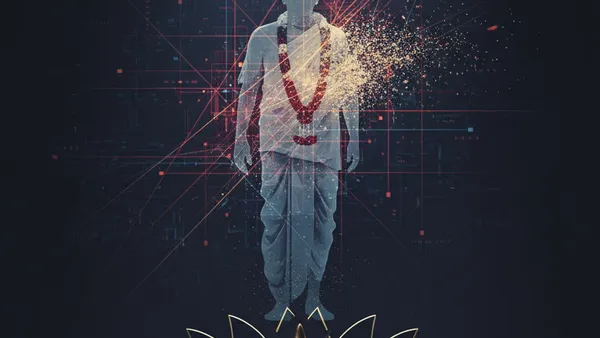
How did a surviving roll of film unravel a geopolitical conspiracy?
Prompted by A NerdSip Learner
Master the intelligence and tactical failures of 1991.
Welcome back! You already know about the sophisticated explosives used in 1991, but let's look at the signals intelligence (SIGINT) failure.
A full year before the assassination, Indian intelligence intercepted a VHF radio transmission between militants in Tamil Nadu and Sri Lanka. The codebreakers deciphered a chilling phrase in a mix of Old Tamil and English: *"Dump pannidungo"* (Eliminate him).
Despite identifying the target as the former Prime Minister, this actionable intelligence was trapped in a bureaucratic silo. It was treated as a general threat assessment rather than an imminent kill order.
This oversight highlights a classic intelligence failure. Collecting data is only half the battle; the true challenge lies in analyzing, sharing, and acting upon it before the geopolitical landscape shifts.
Key Takeaway
Siloed intelligence and analytical failures can render precise, early-warning intercepts entirely useless.
Test Your Knowledge
What critical intelligence failure occurred a year prior to the assassination?
Have you ever wondered how a highly targeted leader was left so vulnerable in a crowd? The answer lies in the Special Protection Group (SPG) Act of 1988.
Following the 1984 assassination of Indira Gandhi, the elite SPG was formed. However, the legislation was written with intense rigidity: it legally mandated protection *only* for the sitting Prime Minister and their immediate family.
When Rajiv Gandhi lost the 1989 election, the incoming government adhered strictly to the letter of the law. They downgraded his security, replacing his highly trained SPG commandos with less specialized state police forces.
This bureaucratic rigidity ignored the actual geopolitical threat perception. At the Sriperumbudur rally, the lack of an elite perimeter allowed the assassin to bypass standard police cordons simply by holding a sandalwood garland, creating a fatal vulnerability.
Key Takeaway
Rigidly applying security protocols without adapting to real-world threat perceptions can create fatal operational voids.
Test Your Knowledge
Why was Rajiv Gandhi's elite SPG security cover withdrawn before the 1991 elections?
Let's dive into an unprecedented breakthrough in forensic history. The conspirators wanted to document their "success" for propaganda, so they hired a local freelance photographer named Haribabu.
Haribabu stood mere feet away from the target when the RDX detonated. While the blast instantly claimed his life, his Chinon CX camera miraculously survived. When investigators recovered the camera, they found an intact roll of film trapped inside.
This film roll became the definitive key to the investigation. Investigators developed a sequence of high-resolution frames capturing the exact moments before the explosion. It provided the Special Investigation Team (SIT) with the visual identities of the assassin, the mastermind, and the logistical support crew.
Never before had plotters accidentally generated the exact forensic evidence needed to unravel their own conspiracy from such close range.
Key Takeaway
An intact camera roll inadvertently captured by the conspirators became the definitive forensic tool that solved the assassination.
Test Your Knowledge
What made Haribabu's camera a unique piece of forensic evidence?
Identifying the conspirators was only the first step; capturing them alive proved nearly impossible. The intense manhunt led the CBI's Special Investigation Team to a hideout in Konanakunte, Bangalore, where the mastermind, Sivarasan, was cornered.
The SIT faced a tactical nightmare. Lacking advanced commando gear, local police hesitated and waited for the elite National Security Guard (NSG) to arrive. This delay proved disastrous.
The targets operated under a strict, non-negotiable cyanide protocol. Recognizing they were trapped, Sivarasan shot himself, while his core team bit down on the cyanide capsules worn around their necks.
By the time forces breached the compound, the targets were dead. This tactical hesitation erased vital firsthand testimony, permanently obscuring the deepest layers of the international conspiracy.
Key Takeaway
Tactical delays during counter-terrorism sieges can allow suspects to trigger suicide protocols, destroying irreplaceable human intelligence.
Test Your Knowledge
What was the primary consequence of the delayed police breach at the Konanakunte hideout?
To truly understand 1991, we must look at the geopolitics of the early 1980s. Intelligence agencies often engage in proxy warfare, but it carries a severe risk known as blowback—when an asset turns against its handler.
In the early 1980s, Indian intelligence actively cultivated, funded, and trained Tamil militant groups to exert geopolitical pressure on the Sri Lankan government. They were viewed as strategic assets.
However, geopolitics is incredibly volatile. When India signed the Indo-Sri Lanka Accord in 1987 and deployed the Indian Peace Keeping Force (IPKF) to disarm the militants, the dynamic violently flipped. The proxy assets suddenly viewed their former handlers as an invading force.
Historians point to this assassination as one of the most tragic examples of intelligence blowback in modern history, proving that proxy warfare can have uncontrollable, devastating consequences.
Key Takeaway
Cultivating militant proxies for short-term geopolitical leverage carries a severe risk of long-term, uncontrollable blowback.
Test Your Knowledge
In the context of this geopolitical crisis, what does the term "blowback" refer to?
Track your progress, earn XP, and compete on leaderboards. Download NerdSip to start learning.