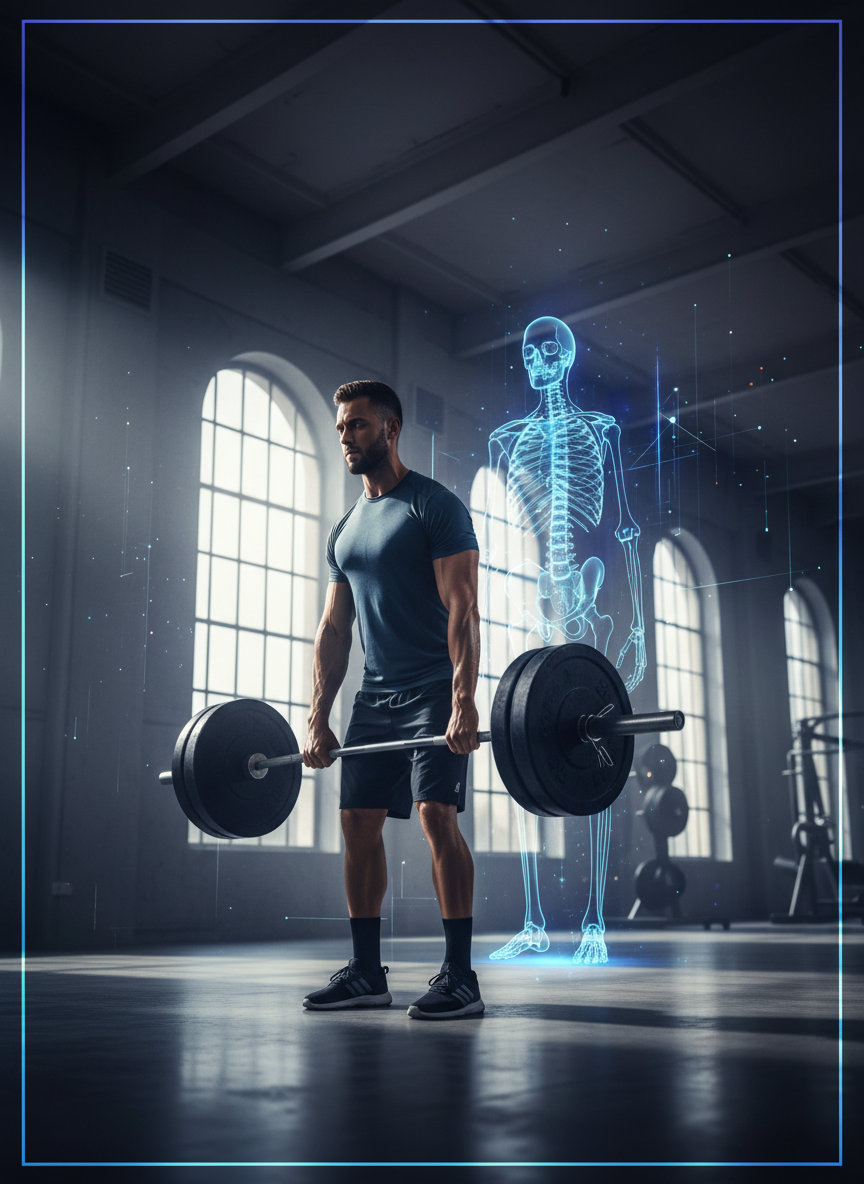
Want to build total-body power and strength with just one single movement?
Prompted by A NerdSip Learner
Discover why the deadlift is the ultimate strength builder.
Welcome to the iron game! If you could only do one exercise for the rest of your life, the smart money is on the deadlift. Why? Because it is the ultimate example of training efficiency. Unlike isolation exercises (like a bicep curl) that target a single muscle, the deadlift creates a massive systemic demand on your body.
Think of it as the "buy one, get everything free" deal of the gym. When you rip that bar off the floor, you aren't just working your legs. You are engaging your hamstrings, glutes, lower back, upper back, traps, forearms, and core all at once. It forces your body to coordinate as a single, powerful unit.
For a 16-year-old looking to build a solid foundation, this is crucial. You don't need to spend three hours doing twelve different machines. By mastering the deadlift, you hit the majority of your major muscle groups in a few heavy sets, leaving you more time to recover and grow.
Key Takeaway
The deadlift recruits more muscle groups simultaneously than almost any other exercise.
Test Your Knowledge
Why is the deadlift considered more 'efficient' than a bicep curl?
Let's talk anatomy without getting too boring. Most people focus on the "mirror muscles"—the chest and abs—because that's what they see in the bathroom mirror. But true athletic power comes from the Posterior Chain. This is the network of muscles running down the back of your body: the traps, lats, erectors, glutes, and hamstrings.
The deadlift is the undisputed ruler of posterior chain development. Strong glutes and hamstrings are what make you run faster and jump higher. Whether you play football, basketball, or just want to look strong, a thick back and powerful legs are the visual sign of a serious lifter.
Neglecting the back of your body is a rookie mistake. It leads to muscle imbalances and a "hunched" look. By deadlifting, you are bulletproofing the muscles that support your spine and generate your body's horsepower. It turns you into a powerhouse from head to toe, not just from the front.
Key Takeaway
The deadlift primarily targets the Posterior Chain, the powerhouse muscles on the back of your body.
Test Your Knowledge
Which set of muscles makes up the 'Posterior Chain'?
Some gym exercises are purely for show, but the deadlift is functional. 'Functional training' is a buzzword, but it simply means training that carries over to real life. The most basic human movement pattern involves bending down and picking something heavy up off the ground. That is exactly what a deadlift is.
Whether you are helping a friend move a couch, carrying heavy grocery bags, or picking up a heavy box in the garage, you are deadlifting. When you train this movement in a controlled environment (the gym), you teach your body how to brace its core and hinge at the hips properly.
This prevents injury in the real world. Most people hurt their backs picking up a pencil because they don't know how to use their hips. By mastering the deadlift, you aren't just getting gym-strong; you are becoming resilient and useful in everyday situations. You become the person everyone calls when things need moving!
Key Takeaway
Deadlifting mimics the most common real-world movement: picking heavy objects up from the ground.
Test Your Knowledge
What makes the deadlift a 'functional' exercise?
Here is a secret weapon for muscle growth: Hormonal Response. When you lift heavy weights on a compound movement like the deadlift, you are putting a massive amount of stress on your Central Nervous System (in a good way). This stress sends a loud 'emergency' signal to your body that it needs to get stronger—fast.
In response to heavy deadlifting, your body naturally releases more muscle-building hormones, like testosterone and growth hormone, compared to smaller isolation movements. This creates a "spillover effect." The effort you put into deadlifting can actually help your other muscles grow, too, because your body is in an anabolic (growth) state.
For a teenager, tapping into this natural growth potential is like adding rocket fuel to your car. You are already at a prime age for growth; adding the deadlift ensures you are squeezing every drop of potential out of your training. It’s hard work, but the biological payoff is huge.
Key Takeaway
Heavy compound lifts trigger a natural release of muscle-building hormones that aid total body growth.
Test Your Knowledge
How does the deadlift help overall muscle growth beyond just the muscles worked?
The deadlift is unique because it starts from a dead stop (hence the name). There is no momentum. There is no bounce. It is just you and a heavy bar sitting on the floor, daring you to move it. This requires a different kind of strength: mental grit.
Other lifts allow you to lower the weight first to store energy (like the bench press). The deadlift requires pure, concentric force generation from zero. Approaching a bar that weighs more than you do teaches you aggression, focus, and confidence. You have to commit 100% before you even pull.
Completing a heavy deadlift creates a massive psychological boost. It teaches you that you can overcome heavy obstacles with patience and technique. That feeling of locking out a new Personal Record (PR) is addictive and empowering. It builds a mindset that says, "If I can move this, I can handle anything." It builds character as much as it builds muscle.
Key Takeaway
Deadlifting builds mental toughness because it requires moving heavy weight from a complete standstill.
Test Your Knowledge
Why is the 'dead stop' aspect of the lift mentally challenging?
Track your progress, earn XP, and compete on leaderboards. Download NerdSip to start learning.