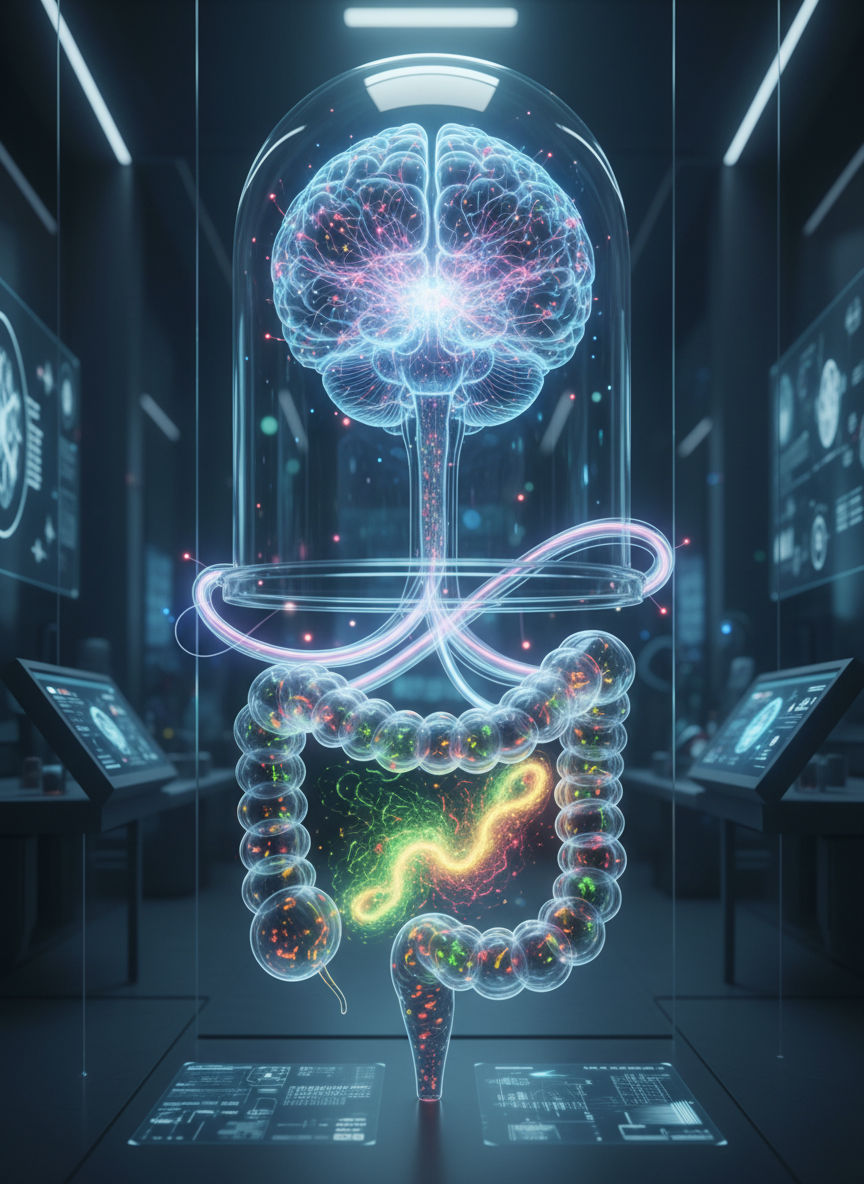
Did you know you have a second 'brain' hidden inside your stomach?
Prompted by A NerdSip Learner
Understand how your gut health controls your mood.
Have you ever felt 'butterflies' in your stomach before a big presentation? That isn't just a metaphor—it is your Enteric Nervous System (ENS) at work. This is a massive network of over 100 million neurons lining your digestive tract.
While your 'main' brain in your head handles math and memories, this 'second brain' handles the complex task of digestion. However, it does much more than just break down food. It is so sophisticated that it can function even if it's disconnected from your main brain!
Scientists believe this second brain is a key player in your emotional health. Because it is so closely linked to your central nervous system, when your gut is upset, it can send signals to your head that trigger mood changes. This is why a 'nervous stomach' feels so real; your two brains are constantly chatting.
Key Takeaway
Your gut has its own independent nervous system that communicates directly with your brain.
Test Your Knowledge
What is the name of the 'second brain' located in your gut?
How do your two brains talk to each other? Meet the Vagus Nerve. Think of it as a biological superhighway that runs directly from your brainstem down to your abdomen. It is the longest and most complex of the cranial nerves.
Interestingly, this highway isn't a one-way street. In fact, scientists estimate that about 80% to 90% of the signals traveling through the Vagus Nerve are going upward—from the gut to the brain. Your gut is constantly 'reporting' its status to your head.
When you are stressed, your brain sends 'danger' signals down the Vagus Nerve, which can slow down digestion or cause cramps. Conversely, a healthy, calm gut sends 'all clear' signals upward, helping you feel relaxed. This bidirectional communication is the foundation of the gut-brain axis.
Key Takeaway
The Vagus Nerve is the primary physical link that allows your gut and brain to talk to each other.
Test Your Knowledge
Most of the signals on the Vagus Nerve travel in which direction?
You might think of Serotonin as a 'brain chemical' because it regulates mood, sleep, and happiness. However, a staggering discovery is that approximately 90% to 95% of your body's serotonin is actually produced in your gut, not your head.
Specific cells in your digestive tract produce this 'feel-good' chemical to help with digestion, but it also plays a massive role in the gut-brain dialogue. When your gut production of serotonin is disrupted, it can lead to feelings of anxiety or low mood.
This is why researchers are increasingly looking at gut health as a way to treat mental health. Your gut also produces other important chemicals like GABA, which helps you feel calm. If your gut chemistry is balanced, your brain is much more likely to feel balanced, too.
Key Takeaway
The vast majority of your 'happiness hormone,' serotonin, is produced in your gut.
Test Your Knowledge
Roughly how much of the body's serotonin is produced in the gut?
You are never truly alone. Your gut is home to trillions of tiny organisms—bacteria, viruses, and fungi—collectively known as the Microbiome. These aren't 'germs' to be feared; most are helpful partners that keep you alive.
These microbes act like a 'middleman' in the gut-brain axis. They break down fiber into short-chain fatty acids, which help protect your brain and reduce inflammation. Some specific bacteria even help 'teach' your gut cells how to produce neurotransmitters like serotonin.
When your microbiome is diverse and healthy, it acts as a shield against stress. However, when the balance is thrown off (often by poor diet or antibiotics), it can send 'distress' signals to the brain. This imbalance is often linked to brain fog and irritability.
Key Takeaway
A diverse community of gut bacteria is essential for producing the chemicals that keep your brain healthy.
Test Your Knowledge
What is the collective name for the trillions of organisms living in your gut?
Since your gut and brain are so closely linked, how you eat directly impacts how you think. To support your 'second brain,' focus on Prebiotics and Probiotics.
Probiotics are live beneficial bacteria found in fermented foods like yogurt, kimchi, and sauerkraut. Prebiotics are the fiber-rich foods (like garlic, onions, and bananas) that act as 'fuel' for those good bacteria. Think of probiotics as the 'seeds' and prebiotics as the 'fertilizer' for your internal garden.
Finally, remember that the connection works both ways. High stress can damage your gut bacteria, and an unhealthy gut can increase stress. Simple habits like mindful eating and reducing ultra-processed foods can strengthen your gut-brain axis, leading to better focus and a more stable mood.
Key Takeaway
Eating fermented foods and high-fiber plants helps maintain the gut-brain connection.
Test Your Knowledge
What is the main difference between probiotics and prebiotics?
Track your progress, earn XP, and compete on leaderboards. Download NerdSip to start learning.