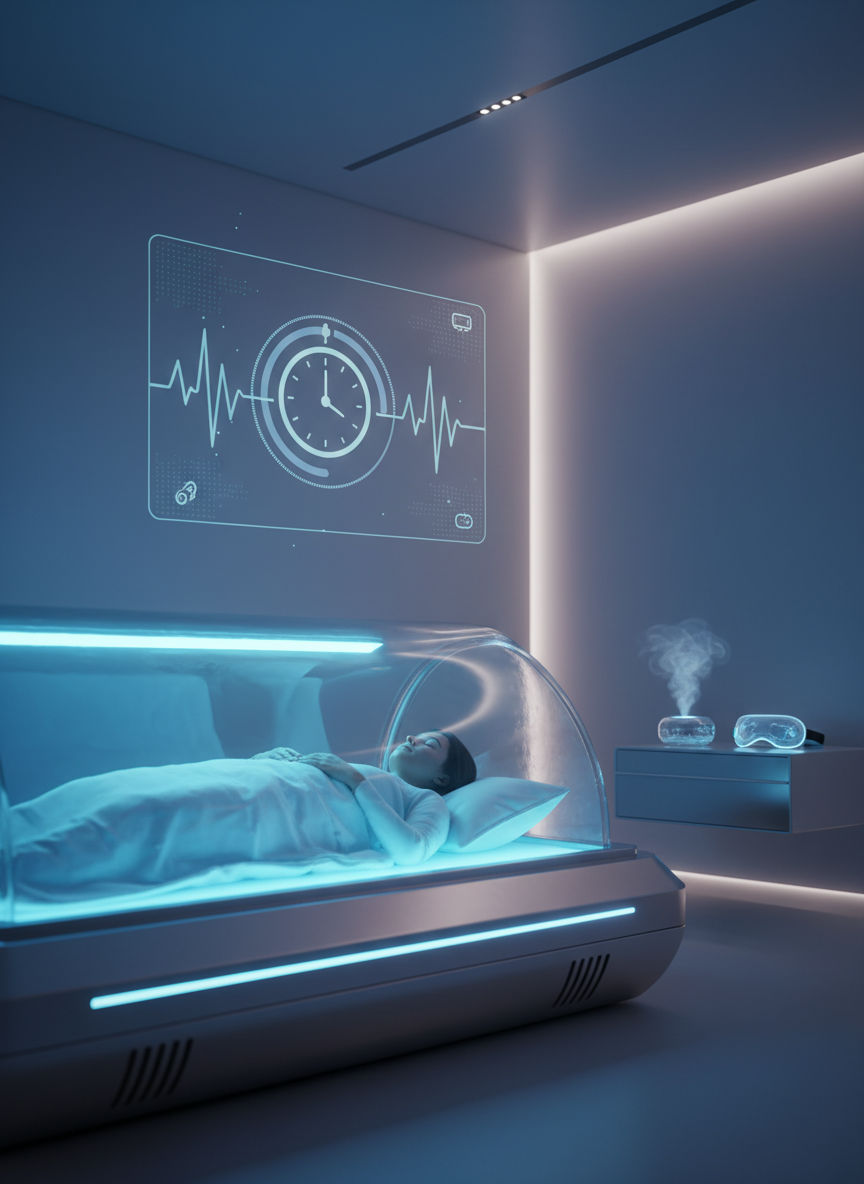
Why does your brain decide to panic the moment you close your eyes?
Prompted by A NerdSip Learner
Master 5 hacks to switch off stress and sleep fast.
Have you ever wondered why you feel totally fine all day, but the second your head hits the pillow, your brain starts racing? It’s not just you! This is your body's ancient survival mechanism kicking in. Back in the day, our ancestors had to be alert for predators in the dark. Today, your brain mistakes a math test or an awkward text for a saber-toothed tiger.
When you are stressed, your body pumps out a chemical called cortisol. Think of cortisol like a shot of bad espresso; it keeps your engine revving when you are trying to park the car. Because you haven't "burned off" this energy physically, it sits there, making you feel twitchy and anxious.
Understanding this is the first step. You aren't broken; your internal alarm system is just a little too sensitive. Now, we need to learn how to manually turn that alarm off so you can finally rest.
Key Takeaway
Nighttime anxiety is often just misplaced survival energy (cortisol) that needs to be calmed down.
Test Your Knowledge
Why does your brain feel 'alert' at night even when you are tired?
Let's talk about the biggest sleep thief in your room: your phone. You probably know looking at screens is "bad" for sleep, but do you know *why*? It’s not just the content that keeps you awake; it’s the light itself.
Your brain has a tiny clock inside it that relies on light to know what time it is. The blue light from your screen mimics the midday sun. When you scroll through TikTok at 11 PM, you are literally shouting at your brain, "IT IS NOON! STAY AWAKE!"
In response, your brain stops making melatonin, the natural hormone that makes you feel drowsy and cozy. It’s like trying to fall asleep with a spotlight on your face. You don't have to throw your phone away, but using 'Night Shift' mode or putting it down 30 minutes before bed can act like a gentle sunset, signaling your body it's time to crash.
Key Takeaway
Blue light tricks your brain into thinking it's daytime, blocking the sleep hormone melatonin.
Test Your Knowledge
What happens when you stare at a screen late at night?
Imagine your brain is a web browser. By the end of the day, you have 50 tabs open: homework due tomorrow, that weird thing your friend said, and a song stuck in your head. When you try to sleep, your brain frantically tries to refresh all these tabs at once. This is cognitive overload.
The fix is a technique called the Brain Dump. It sounds gross, but it’s magic. Keep a notebook and pen by your bed. Before you lay down, spend 2 minutes writing down everything bothering you or everything you need to do tomorrow.
By writing it down, you are essentially "saving" the file to the paper. Your brain realizes, "Oh, I don't have to hold onto this information anymore; it's safe on the paper." It allows you to mentally close those tabs. The worry doesn't disappear, but the *pressure* to remember it vanishes, letting you relax.
Key Takeaway
Writing down your worries offloads them from your brain, stopping the endless loop of thoughts.
Test Your Knowledge
What is the main purpose of the 'Brain Dump' technique?
Sometimes your mind is calm, but your body is still buzzing. You can't just *think* yourself into relaxation; you have to physically force the switch. There is a biological "cheat code" for this called the 4-7-8 Breathing Technique.
Here is how it works: You inhale through your nose for 4 seconds. You hold that breath for 7 seconds. Then, you exhale forcefully through your mouth (making a whoosh sound) for 8 seconds.
Why does this work? When you are stressed, you take short, shallow breaths. By slowing your exhale to be longer than your inhale, you are hacking your vagus nerve. This sends a direct signal to your heart to slow down and tells your nervous system, "We are safe now." It shifts you from "Fight or Flight" to "Rest and Digest" almost instantly. Try doing this 4 times in a row tonight.
Key Takeaway
Extending your exhale activates your body's physical relaxation switch, slowing your heart rate.
Test Your Knowledge
In the 4-7-8 technique, which part is the most important for relaxation?
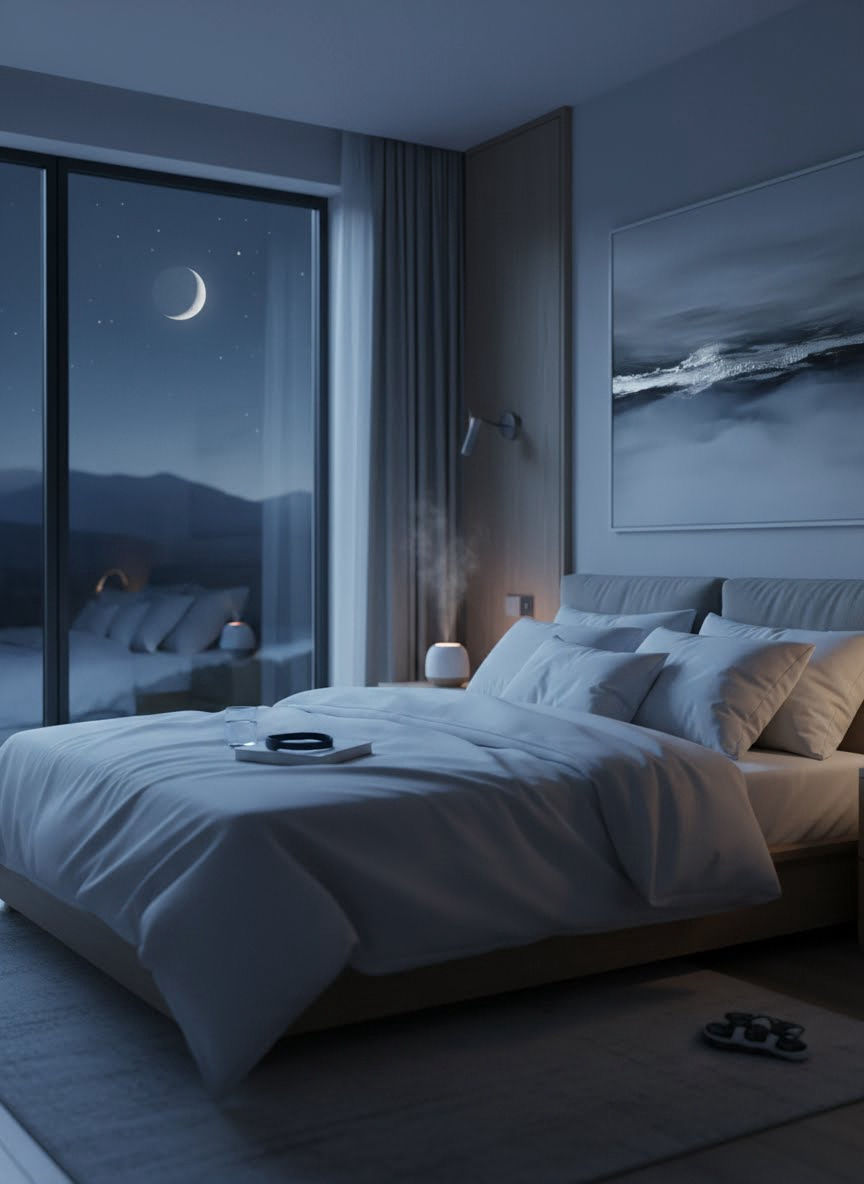
You are a creature of nature, and nature sleeps in cool, dark places. If your room is hot, messy, or bright, your body will struggle to settle down. We want to create a Bat Cave vibe.
First, temperature. To fall asleep, your core body temperature actually needs to drop a tiny bit. If your room is too warm, your body has to work hard to cool down, which keeps you awake. Try to keep your room cooler than the rest of the house, or stick a foot out from under the covers to vent heat.
Second, darkness. Even the little LED light on your TV or a streetlamp outside can disturb your sleep quality. Your skin actually has receptors that can sense light! Make your room as pitch black as possible. If you can't block the windows, try a sleep mask. When you enter your cold, dark cave, your brain instantly knows: "Game over. Time to recharge."
Key Takeaway
A cool and pitch-black environment signals your biological clock that it is time to hibernate.
Test Your Knowledge
Why helps your body fall asleep faster?
Track your progress, earn XP, and compete on leaderboards. Download NerdSip to start learning.