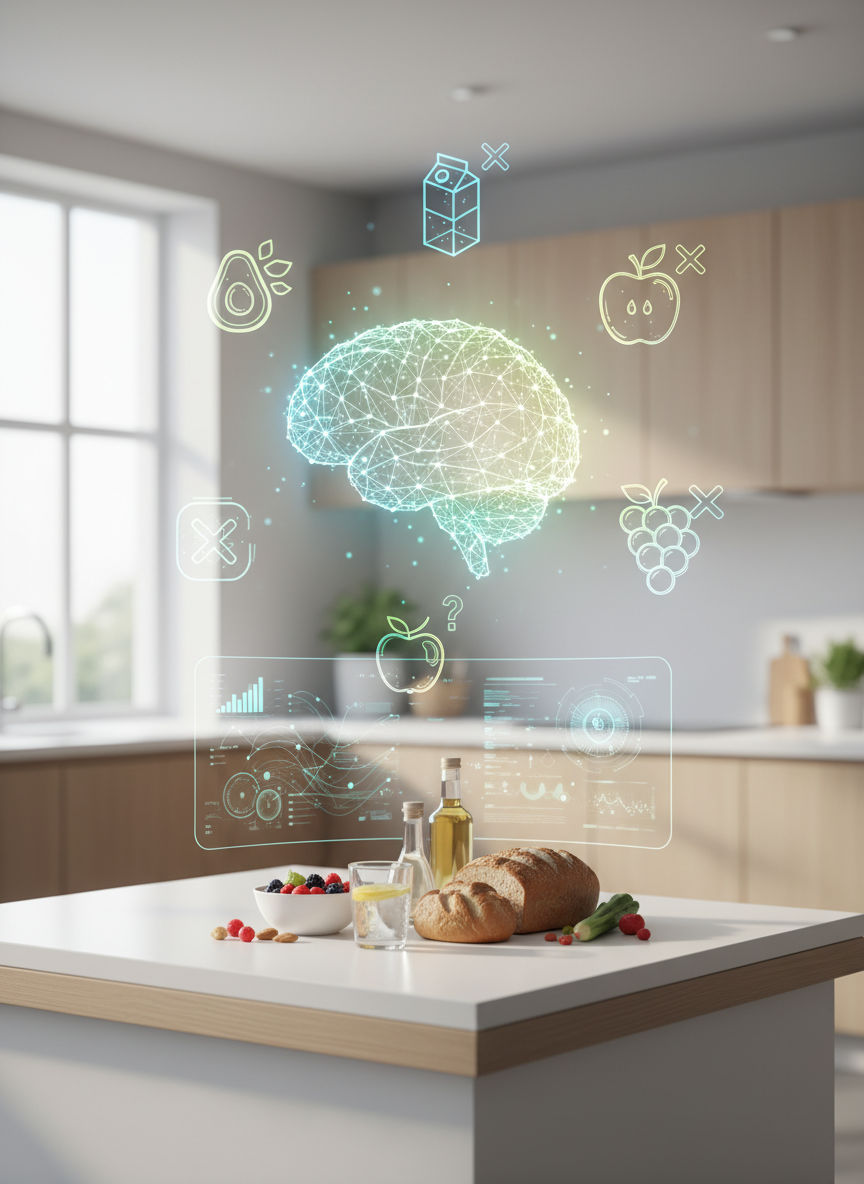
Do sweeteners spike insulin? Does fasting really reset your cells?
Prompted by NerdSip Explorer #6452
Master metabolic science to debunk complex nutrition myths with confidence.
The myth claims the body excretes any protein exceeding 30 grams per meal. While it sounds plausible to many, human nutrition physiology is far more sophisticated.
There is a plateau for Muscle Protein Synthesis (MPS) at about 0.4g of protein per kilogram of body weight per meal—the "Muscle Full Effect." However, absorption and synthesis are two different things. Your body doesn't just waste valuable macronutrients.
The gastrointestinal tract is highly flexible. Large amounts of protein simply slow gastric emptying. Amino acids are released into the bloodstream over several hours, inhibiting protein breakdown and supporting metabolic processes like enzyme and neurotransmitter production.
No gram is "lost." While age-related anabolic resistance may require higher doses, total daily intake matters more for healthy adults than micromanaging individual meals. Your gut isn't a kitchen timer that shuts off after 30 grams.
Key Takeaway
Your body absorbs more than 30g of protein; the limit only applies to acute muscle synthesis.
Test Your Knowledge
What happens to protein exceeding the amount needed for maximum muscle synthesis?
The "alkaline diet" promises to regulate blood pH and prevent disease by avoiding acid-forming foods. From a physiological standpoint, this premise is fundamentally flawed.
Our blood pH is strictly regulated between 7.35 and 7.45. Any deviation outside this range would result in life-threatening acidosis or alkalosis. The real buffering work isn't done by your salad—it's handled by your lungs (exhaling CO2) and kidneys (excreting H+ ions).
Diet only changes the pH of your urine, which is actually proof that your body’s buffering system is working perfectly. While the PRAL formula calculates potential renal acid load, it is irrelevant to blood pH in healthy individuals.
Alkaline diets feel "healthy" because they promote fruits, vegetables, and whole foods while cutting processed junk—not because they are manipulating your internal acid-base balance.
Key Takeaway
Food only changes your urine pH; your blood pH is strictly regulated by your kidneys and lungs.
Test Your Knowledge
Which organs are primarily responsible for regulating blood pH?
Intermittent fasting is often marketed alongside autophagy—a cellular recycling program that clears out damaged proteins. The popular myth claims the body hits a "reset button" after exactly 16 hours without food.
These precise timelines are based almost exclusively on murine models (studies on mice). A mouse's metabolism is significantly faster than a human's. For a mouse, 24 hours of fasting is metabolically equivalent to several days for us.
In humans, autophagy isn't a digital switch; it’s a constant basal process. While nutrient deprivation (low insulin, inhibited mTOR pathway) upregulates it, humans likely need 24 to 48 hours of true water fasting to reach clinically significant peaks.
16:8 is an excellent tool for calorie control and insulin sensitivity. However, selling it as a guaranteed engine for massive cellular anti-aging oversimplifies current clinical science.
Key Takeaway
16-hour fasting doesn't trigger massive autophagy in humans; those timelines come from mouse studies.
Test Your Knowledge
Why is the claim that autophagy starts after exactly 16 hours scientifically problematic?
A persistent myth claims that calorie-free sweeteners like aspartame or sucralose cause a massive insulin spike. The theory: the brain tastes "sweet," expects sugar, and preemptively releases insulin, leading to cravings.
This mechanism is called Cephalic Phase Insulin Release (CPIR). However, numerous controlled human studies show that non-nutritive sweeteners do not trigger a clinically relevant CPIR in healthy people. Blood sugar and insulin levels remain stable.
The real conversation is happening in the microbiome. Emerging research suggests certain sweeteners might alter gut flora over time, which *secondarily* affects glucose tolerance. This is highly individual and still being researched.
The direct link of "sweetener = insulin spike = fat storage" is physiologically debunked. They remain effective tools for calorie reduction, even if we now view their impact on gut health with more nuance.
Key Takeaway
Sweeteners don't cause a direct insulin spike, but excessive use may impact your gut microbiome.
Test Your Knowledge
What is 'Cephalic Phase Insulin Release' (CPIR)?
In the wellness industry, antioxidants are the ultimate "radical scavengers." The logical—but flawed—conclusion is that high-dose supplements (like Vitamin C or E) maximize health and muscle recovery.
This ignores the fundamental concept of hormesis. Reactive oxygen species (ROS)—free radicals—are not just damaging; they are essential signaling molecules. During exercise, the body intentionally produces ROS to trigger adaptations like mitochondrial biogenesis.
High-dose antioxidant supplements can blunt these internal signals. Studies show that athletes taking massive doses of Vitamin C and E experience significantly fewer training adaptations compared to placebo groups.
Even worse, large epidemiological studies have associated chronic over-supplementation of certain antioxidants with *increased* mortality. Cellular health requires a dynamic physiological balance, not a constant flood of isolated pills.
Key Takeaway
High doses of isolated antioxidants can block critical cellular adaptations, especially from exercise.
Test Your Knowledge
Why are free radicals (ROS) actually important during exercise?
Track your progress, earn XP, and compete on leaderboards. Download NerdSip to start learning.