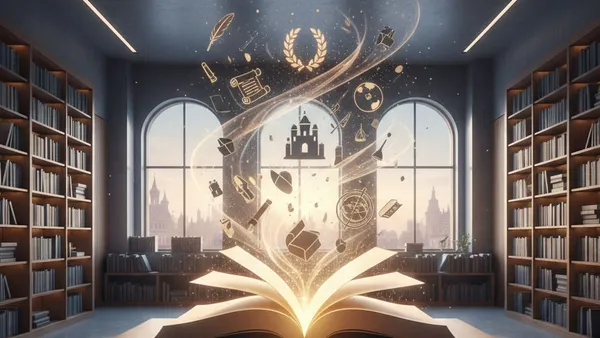
Why do we still care about old books and made-up stories?
Prompted by NerdSip Explorer #5098
Discover the magic of reading.
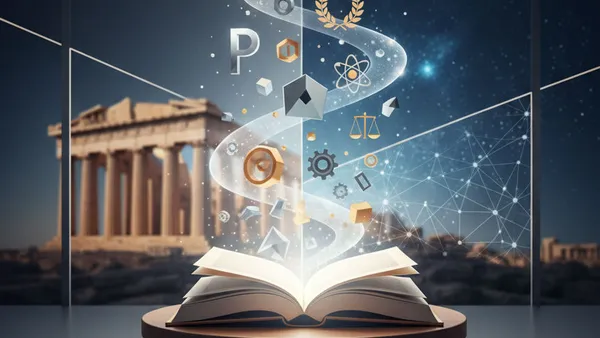
Imagine you could step inside another person's mind, travel back in time, or visit galaxies that don't even exist. That is the superpower of literature. At its core, literature is simply the art of written storytelling.
Since the dawn of humanity, we have used stories to make sense of our world. While early humans shared tales around a campfire, today we bind them in books. But the goal remains the exact same: to share experiences, emotions, and big ideas.
You might think literature is just thick, dusty textbooks assigned in high school, but it is so much more. It includes everything from thrilling murder mysteries to beautiful love poems and mind-bending science fiction.
Think of literature as a massive, ongoing conversation across history. Every time you read a book, you are pulling up a chair to join that conversation. It is a mirror reflecting what it means to be human, and anyone can look into it.
Key Takeaway
Literature is the art of written storytelling that connects us across time and space.
Test Your Knowledge
What is the main purpose of literature as described in this lesson?
Why do we spend hours reading about people who never even existed? It sounds a little bit crazy when you say it out loud! The answer lies in how our brains process stories.
Fiction is literature created from the imagination. Even though the events are made up, the emotions are completely real. When a fictional character experiences heartbreak or joy, our brains light up as if we are feeling those exact same emotions ourselves.
Psychologists have found that reading fiction actually builds empathy. It is like a flight simulator for the human mind. By practicing how to feel for made-up characters, we become much better at understanding the real people in our everyday lives.
So, fiction isn't just an escape from reality; it is a tool to understand reality better. Through imaginary worlds, authors can reveal deep, honest truths about society, love, and what it means to be alive.
Key Takeaway
Fiction uses imaginary stories to build real empathy and reveal honest truths about life.
Test Your Knowledge
How is reading fiction described in this lesson?
For many people, the word poetry brings back stressful memories of trying to decode confusing riddles in English class. But poetry doesn't have to be intimidating.
Think of regular writing (prose) like a photograph, capturing a clear picture of an event. Poetry, on the other hand, is like an abstract painting. It cares less about giving you all the facts and more about making you feel a specific emotion.
Poets achieve this by treating words like musical instruments. They pay close attention to rhythm, sound, and imagery. Instead of simply saying "I am sad," a poet might describe a heavy, gray raincloud settling over a quiet, empty house.
You do not have to "solve" a poem to enjoy it. Just like listening to a favorite song, you can simply let the rhythm and the beautiful language wash over you. If it makes you feel something, the poet has done their job perfectly!
Key Takeaway
Poetry is about using the sound and rhythm of words to make you feel an emotion, rather than just stating facts.
Test Your Knowledge
What art form is poetry compared to in this lesson?
When people talk about literature, they often whisper reverently about "The Classics." These are books written decades or centuries ago, like works by Jane Austen or Charles Dickens. But what actually makes a book a classic?
A classic is simply a book that has survived the test of time. It stays popular generation after generation because the themes inside it—like jealousy, ambition, forbidden love, or the struggle for freedom—never go out of style.
Because languages evolve, older books can sometimes feel challenging to read. The sentences might be longer, and the slang is definitely outdated. But underneath those old-fashioned words, the characters are dealing with the exact same messy human problems we face today.
You don't have to read classics to enjoy literature, but trying one can be a rewarding challenge. It is incredibly comforting to realize that humans from hundreds of years ago worried about the same things you do.
Key Takeaway
Classics are older books that remain relevant today because they explore universal, timeless human struggles.
Test Your Knowledge
Why do classic books stay popular generation after generation?
The biggest secret in literature is that there is no "right" way to be a reader. You do not have to read thick, serious novels to be a lover of books. The best way to start is by following your own curiosity.
Think about the movies or TV shows you already love. Do you enjoy thrilling mysteries, sweeping historical dramas, or lighthearted comedies? Genres are simply categories of stories, and finding your favorite genre is the key to falling in love with reading.
If a book isn't grabbing your attention after a few chapters, put it down! Reading should feel like a joy, not a chore. There are millions of books in the world, and life is simply too short to force yourself through a story you aren't enjoying.
Visit a local library or bookstore, read the backs of a few covers, and pick whatever sparks your interest. Your literary adventure is waiting for you!
Key Takeaway
The best way to enjoy literature is to follow your own interests and read genres that genuinely excite you.
Test Your Knowledge
What should you do if you aren't enjoying a book after a few chapters?
Track your progress, earn XP, and compete on leaderboards. Download NerdSip to start learning.