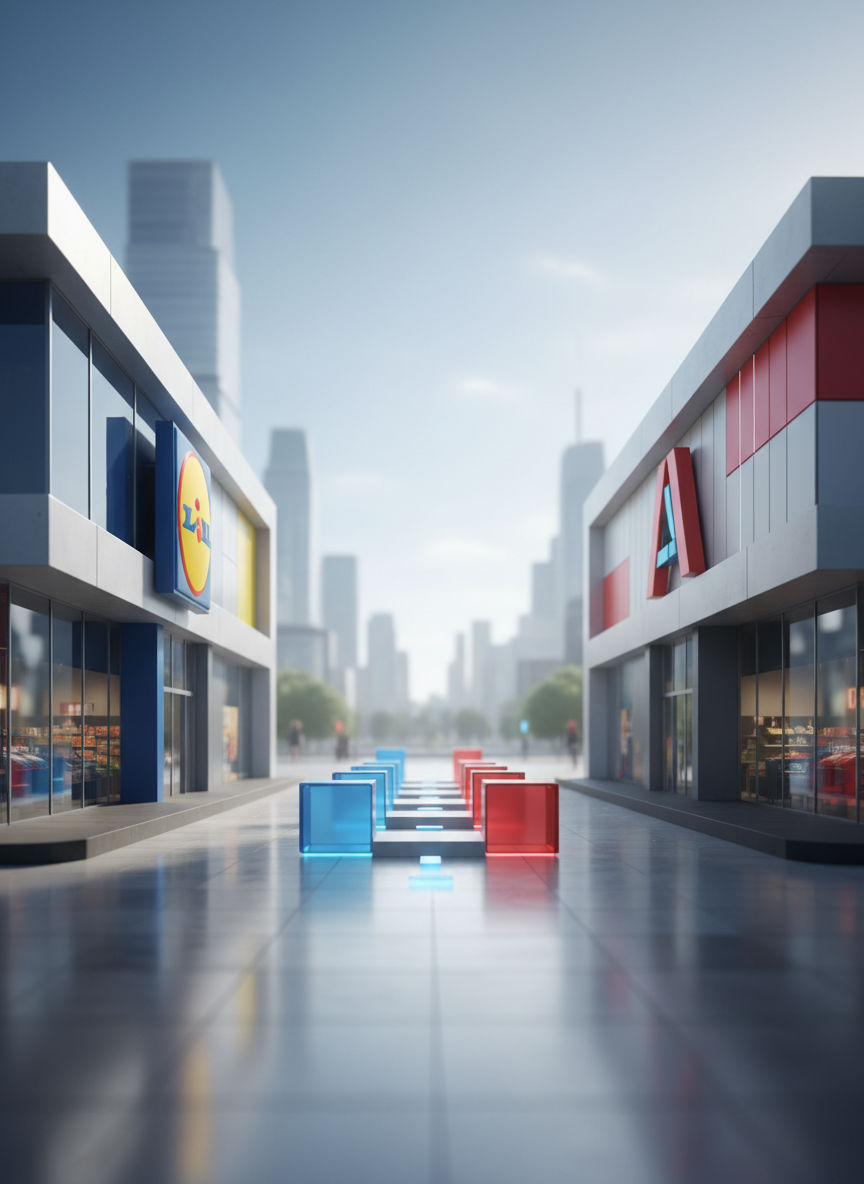
Why are these two German discount supermarkets taking over the globe?
Prompted by A NerdSip Learner
Master the genius business models of Aldi and Lidl.
Have you ever walked into an Aldi or Lidl and noticed they feel completely different from a standard, massive supermarket? That is entirely by design! Both of these grocery giants trace their origins back to Germany.
Aldi was born when two brothers took over their mother's small store after World War II. Meanwhile, Lidl's roots stretch back to a wholesale fruit business in the 1930s. Though the companies are completely unrelated, they share a brilliant strategy: the hard discount model.
Instead of stocking 40,000 different items like a traditional supermarket, they stock just a few thousand. They skip fancy displays, leave products right in their cardboard shipping boxes, and ask you to bag your own groceries.
By aggressively cutting out all the extra "frills" of traditional retail, they keep their operational costs incredibly low. And who benefits from those low costs? You do, through significantly cheaper prices at the register!
Key Takeaway
Aldi and Lidl use a "hard discount model," slashing overhead costs by minimizing inventory and skipping fancy store displays.
Test Your Knowledge
Which of the following is a key feature of the "hard discount" grocery model?
If you go looking for famous brand-name sodas or cereals in Aldi or Lidl, you might be surprised. The vast majority of the products on their shelves are brands you have never heard of!
This is the secret weapon of their business model: private labels. Instead of buying products from giant, famous food corporations, Aldi and Lidl work directly with manufacturers to create their very own exclusive product lines.
At Aldi, roughly 90% of the store consists of these private-label goods. At Lidl, it is usually around 80%. Because they own the brands, they don't have to spend millions of dollars on national TV commercials or expensive marketing campaigns.
This strategy gives them total control over their supply chain and pricing. They can ensure the quality matches the big name-brands, but sell it to you for a fraction of the cost. It is a win-win for budget-savvy shoppers!
Key Takeaway
By filling their shelves with their own "private label" brands, Aldi and Lidl avoid massive marketing costs and pass the savings to shoppers.
Test Your Knowledge
Why do Aldi and Lidl focus so heavily on private-label products?
While Aldi and Lidl might look like twins to the untrained eye, they actually have totally different strategies for winning you over as a customer. They are intense competitors!
Aldi is obsessed with extreme efficiency. Their stores are highly standardized, their cashiers sit down to scan items faster, and they stick strictly to the bare essentials to keep prices at rock bottom.
Lidl, on the other hand, tries to add a little bit of "fancy" to the discount experience. Their stores are usually slightly larger than Aldi's. When you walk into a Lidl, the first thing you usually notice is the smell of a fresh bakery right near the entrance!
Lidl also carries slightly more famous name-brand items alongside its private labels, aiming to give you a mix of a premium feel and budget pricing. So, if you want pure speed and efficiency, Aldi is your champion. If you want a fresh croissant with your cheap groceries, Lidl takes the crown!
Key Takeaway
While Aldi focuses strictly on maximum efficiency and low prices, Lidl offers a slightly larger store with extra perks like an in-house bakery.
Test Your Knowledge
What is a noticeable difference you might experience when walking into a Lidl compared to an Aldi?
Track your progress, earn XP, and compete on leaderboards. Download NerdSip to start learning.