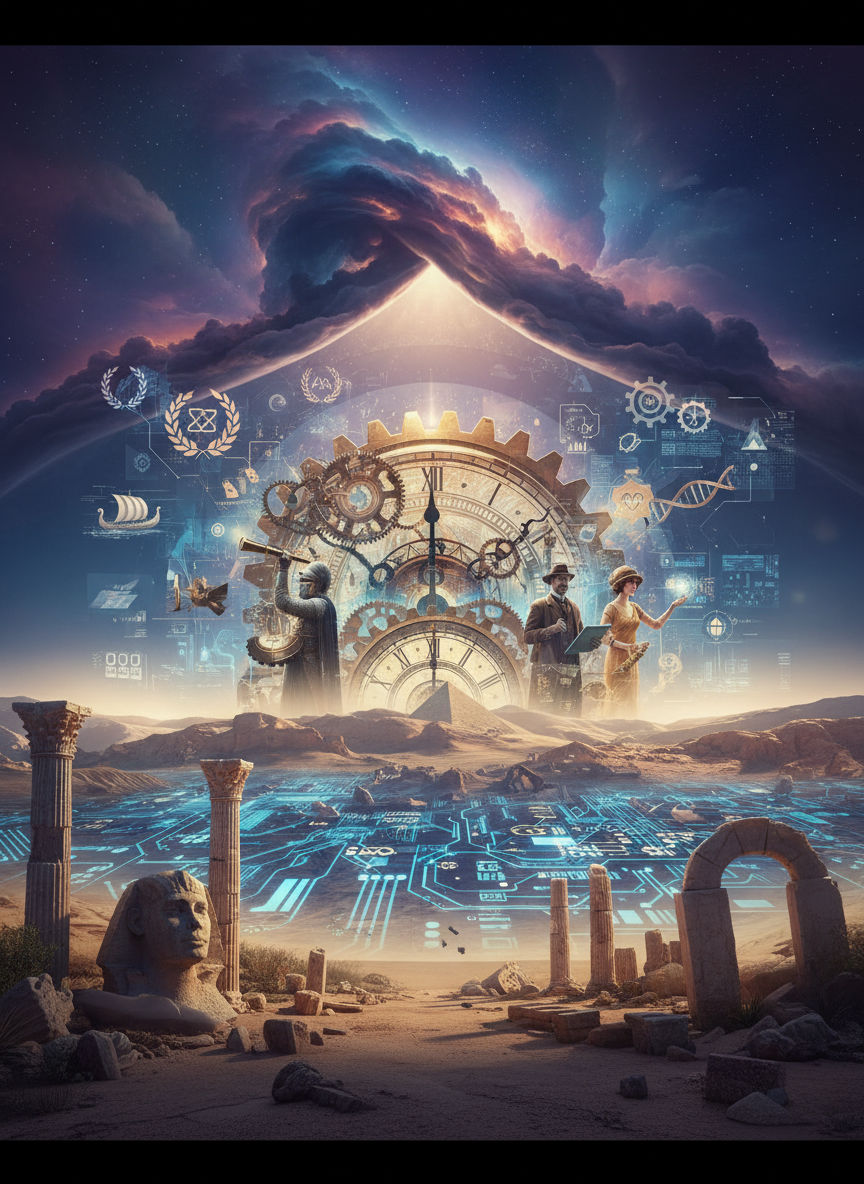
What if everything you do today is tomorrow's history?
Prompted by NerdSip Explorer #3872
Understand the big picture of human history.
Think of history as the ultimate reality show, featuring billions of cast members over thousands of years! It's not just a boring list of names and dates you have to memorize. It is the dramatic, messy, and fascinating story of how we got to where we are right now.
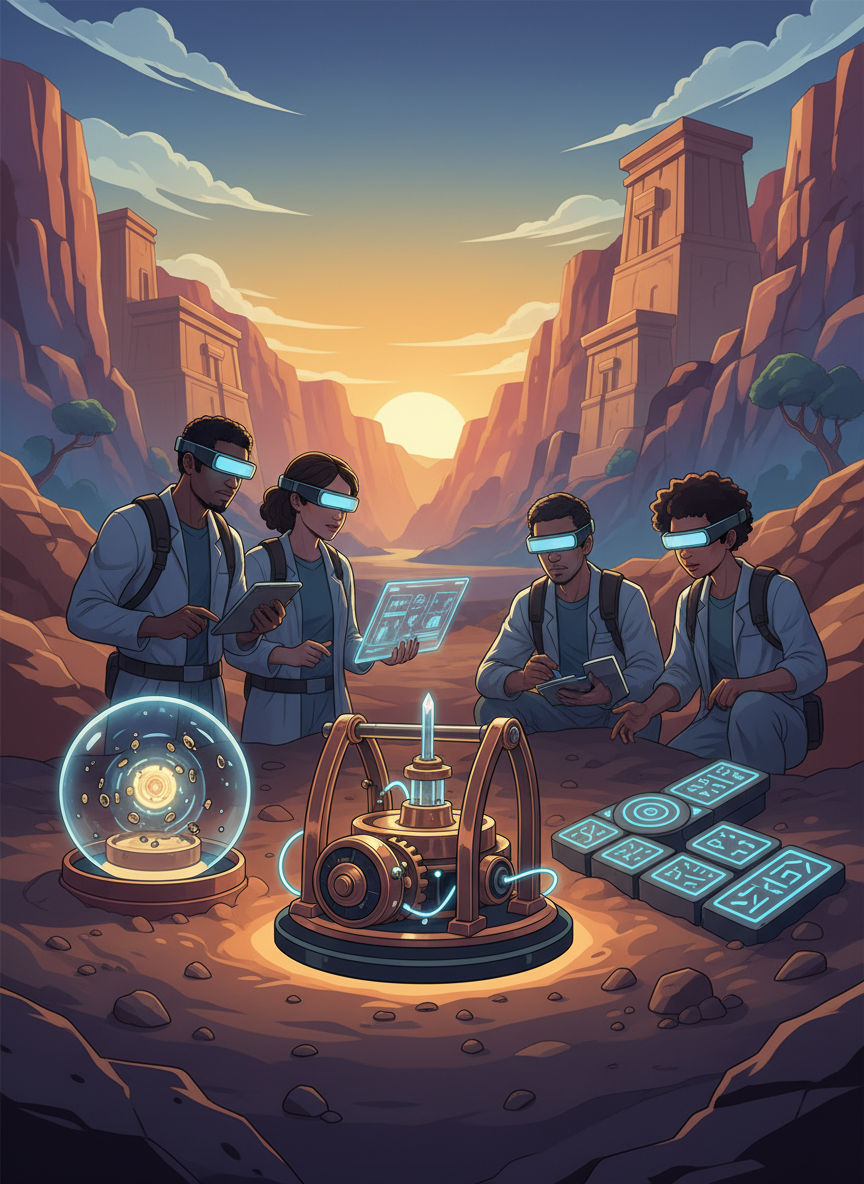
But how do we actually know what happened? Historians act like detectives using clues called sources. A primary source is a direct clue from the exact time period—like an ancient diary, a piece of cracked pottery, or a faded photograph.
A secondary source is when someone much later writes about those events, like a modern textbook or a history documentary. By piecing these different clues together, we slowly build a clearer picture of the past.
The most exciting part? History isn't completely "fixed." Every time we dig up a new artifact or discover a lost letter in an attic, the story can completely change and grow!
Key Takeaway
History is a dynamic detective story pieced together using primary and secondary clues from the past.
Test Your Knowledge
Which of the following is the best example of a primary source?
Have you ever felt overwhelmed trying to understand when historical events happened? Historians solve this by breaking time into manageable chunks, much like the changing seasons of a long-running TV series. We call these distinct chunks eras or periods.
The story starts with Prehistory, the incredibly long "Season One" before humans invented writing. Then comes the Ancient Era, featuring the world's first massive empires, like those in Rome, Greece, and Egypt.
Next up is the Middle Ages (or Medieval period). This era is often remembered for castles, knights, and kings in Europe, but it was also a time of massive scientific and cultural growth in Asia and the Middle East.
Finally, we arrive at the Modern Era. This starts roughly around the time humans began exploring the entire globe by sea and leads right up to the smartphone in your hand! When you start viewing history through these massive eras, the seemingly endless timeline of dates suddenly transforms into an exciting, easy-to-follow story.
Key Takeaway
Historians divide time into major "eras" to make the long, complex story of humanity easier to understand.
Test Your Knowledge
Which era covers the massive stretch of time before humans invented writing?
For the vast majority of human history, we were hunter-gatherers. We lived as nomads in small groups, moving constantly to follow migrating herds of animals and find wild plants to eat. It was a tough, unpredictable way to live, but it kept our ancestors closely connected to nature's rhythms.
Then, something revolutionary happened: humans learned how to farm! This massive shift is known as the Agricultural Revolution. By deliberately planting seeds and taming wild animals, people could finally stay in one place.
Because they didn't have to spend every waking hour looking for food, populations exploded. Tiny farming villages slowly turned into bustling towns, and those towns eventually grew into massive cities. We call this complex, settled way of living civilization.
With cities came amazing new inventions. People needed rules to live so closely together, leading to the very first governments. They also needed to keep track of their grain supplies, which directly sparked the invention of writing!
Key Takeaway
The invention of farming allowed early humans to settle down, leading directly to the creation of cities, governments, and writing.
Test Your Knowledge
What major shift allowed early humans to stop moving constantly and build the first cities?
As early cities grew richer and more powerful, some began taking over their neighbors to create empires. An empire is simply a large group of different nations, territories, or peoples that are all controlled by one powerful ruler or government.
While empires were often built through harsh wars, they accidentally created something wonderful: a connected world. To move their massive armies around quickly, emperors built incredible networks of roads. These military roads soon became bustling highways for everyday merchants.
One of the most famous networks was the Silk Road, a massive web of trails linking Asia to Europe. Along these dusty routes, people traded physical, luxury goods like spices, silk, and gold. But more importantly, they traded invisible things!
Ideas, new religions, recipes, and groundbreaking technologies traveled back and forth along these trade routes. This early version of globalization meant that a clever invention in China could eventually change the way everyday people lived in Rome.
Key Takeaway
Empires built roads for their armies, which accidentally created massive trade networks that shared goods, ideas, and technology globally.
Test Your Knowledge
What was the most important "invisible" thing traded along early global routes like the Silk Road?
You might be wondering, "Why should I care about people who lived thousands of years ago?" The answer is remarkably simple: history is the ultimate instruction manual for human behavior.
While our technology changes incredibly fast, basic human nature stays surprisingly the same. People throughout time have experienced the exact same fears, dreams, greed, and love that we do today. As the famous saying goes, "History doesn't repeat itself, but it often rhymes."
By studying the past, we can clearly see the warning signs of bad decisions—like how societies often collapse when they ignore extreme inequality or fight pointless wars. We can also find endless inspiration in how everyday people overcame impossible odds to create positive change.
You are a living, breathing part of history right now! Every choice we make as a society today will be studied by future generations. Understanding where we came from is simply the best tool we have for figuring out where we should go next.
Key Takeaway
Studying history helps us understand human nature and learn from past mistakes so we can build a much better future.
Test Your Knowledge
According to this lesson, what is the main benefit of studying history?
Track your progress, earn XP, and compete on leaderboards. Download NerdSip to start learning.