Why do faraway conflicts and treaties actually impact your daily life?
Prompted by NerdSip Explorer #3296
Master the rules of the global neighborhood.
Imagine the world as a giant, bustling neighborhood. Instead of houses with families, we have states (commonly called countries). Just like you control what happens inside your own home, a state controls what happens inside its borders. This fundamental rule is called sovereignty.
Sovereignty means no outside power is supposed to dictate how a country runs its own affairs. If a neighbor tries to force their way into your house, there’s going to be a massive problem. The exact same logic applies to global politics—violating borders usually leads to severe conflict.
But here is the catch: unlike a real town, there is no ultimate global police force that can easily arrest a powerful country for breaking the rules. That is why countries must figure out how to live next to each other, negotiate, and solve disputes on their own. This massive, ongoing web of interactions is what we call international relations.
Key Takeaway
Countries act like neighbors who manage their own households, but without a global police force to keep them in line.
Test Your Knowledge
What does the concept of 'sovereignty' mean in global politics?
Since there is no world president or global police, countries desperately need a place to talk out their problems. Enter the United Nations (UN). Think of it as a giant town hall meeting where almost every country has a seat at the table.
The UN was created right after World War II. The main goal was simple: stop countries from starting another massive, destructive global war. Through diplomacy—the art of negotiating and talking rather than fighting—countries try to find common ground.
Inside the UN, leaders discuss everything from climate change to human rights. While the UN can't always force a powerful country to do something, it is incredibly valuable because it keeps communication open. Even when countries strongly disagree, having a dedicated place to talk makes it much easier to cool down tensions and avoid physical conflict. Keeping diplomats talking is often a massive victory for global peace.
Key Takeaway
The United Nations acts as a global meeting place where countries use diplomacy to talk through problems instead of fighting.
Test Your Knowledge
What is the primary purpose of diplomacy?
In our global neighborhood, no country can thrive entirely on its own. They need friends to help them stay safe and grow wealthy. This is where alliances and treaties come into play.
An alliance is essentially a formal team. Countries sign an agreement promising to watch each other's backs. For example, NATO is a famous military alliance where members agree that an attack on one of them is treated as an attack on all of them. It is the ultimate buddy system on a global scale.
Countries also form economic teams. They sign trade agreements to make it cheaper and easier to buy and sell goods with each other. By linking their economies together, countries become dependent on one another. This doesn't just make them richer—it makes them much less likely to go to war, because fighting your biggest customer is absolutely terrible for business!
Key Takeaway
Alliances and trade agreements create powerful teams that boost economic wealth and deter military attacks.
Test Your Knowledge
Why do economic trade agreements often make countries less likely to go to war with each other?
How does one country actually get another country to do what it wants? In global politics, leaders rely on two incredibly important tools: Hard Power and Soft Power.
Hard power is the stick. It involves using force, threats, or money to get your way. This could mean rolling tanks to a border, launching a military strike, or using economic sanctions (cutting off trade to hurt another country's economy). It is direct, forceful, and often aggressive.
Soft power, on the other hand, is the carrot. It is the amazing ability to attract and persuade others without using any force at all. A country uses soft power by sharing its culture, music, movies, and political values. If people around the world genuinely love your country's pop culture and admire your way of life, their leaders are much more likely to cooperate with you voluntarily.
Key Takeaway
Hard power uses force and threats to get results, while soft power uses cultural attraction and persuasion.
Test Your Knowledge
Which of the following is the best example of a country using 'Soft Power'?
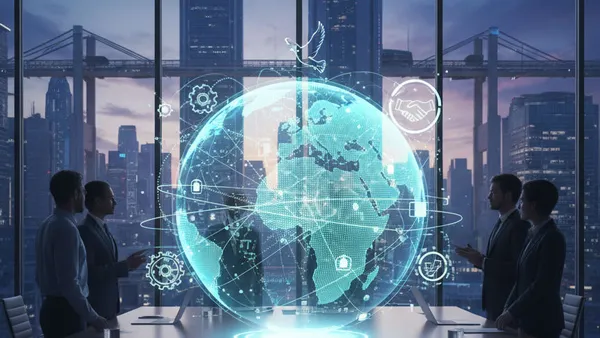
Today, global politics is more complicated than ever because of globalization. This is the ongoing process of the world becoming incredibly interconnected through fast travel, instant internet communication, and massive global trade.
Imagine global politics as a giant spiderweb. Decades ago, a tremor on one side of the web might barely be felt on the other. Today, the web is pulled incredibly tight. A factory closing in Asia, a sudden election in Europe, or a new technology created in America can instantly affect prices and jobs in your own hometown.
Because of this tight web, global politics isn't just about presidents and prime ministers arguing over borders anymore. It involves multinational companies, environmental groups, and everyday citizens. We are all deeply connected citizens of this global neighborhood now, and learning how it works is the first step to truly understanding the modern world.
Key Takeaway
Globalization has woven the world together, meaning events in faraway countries now directly impact our daily lives.
Test Your Knowledge
How does the 'spiderweb' analogy explain modern globalization?
Track your progress, earn XP, and compete on leaderboards. Download NerdSip to start learning.