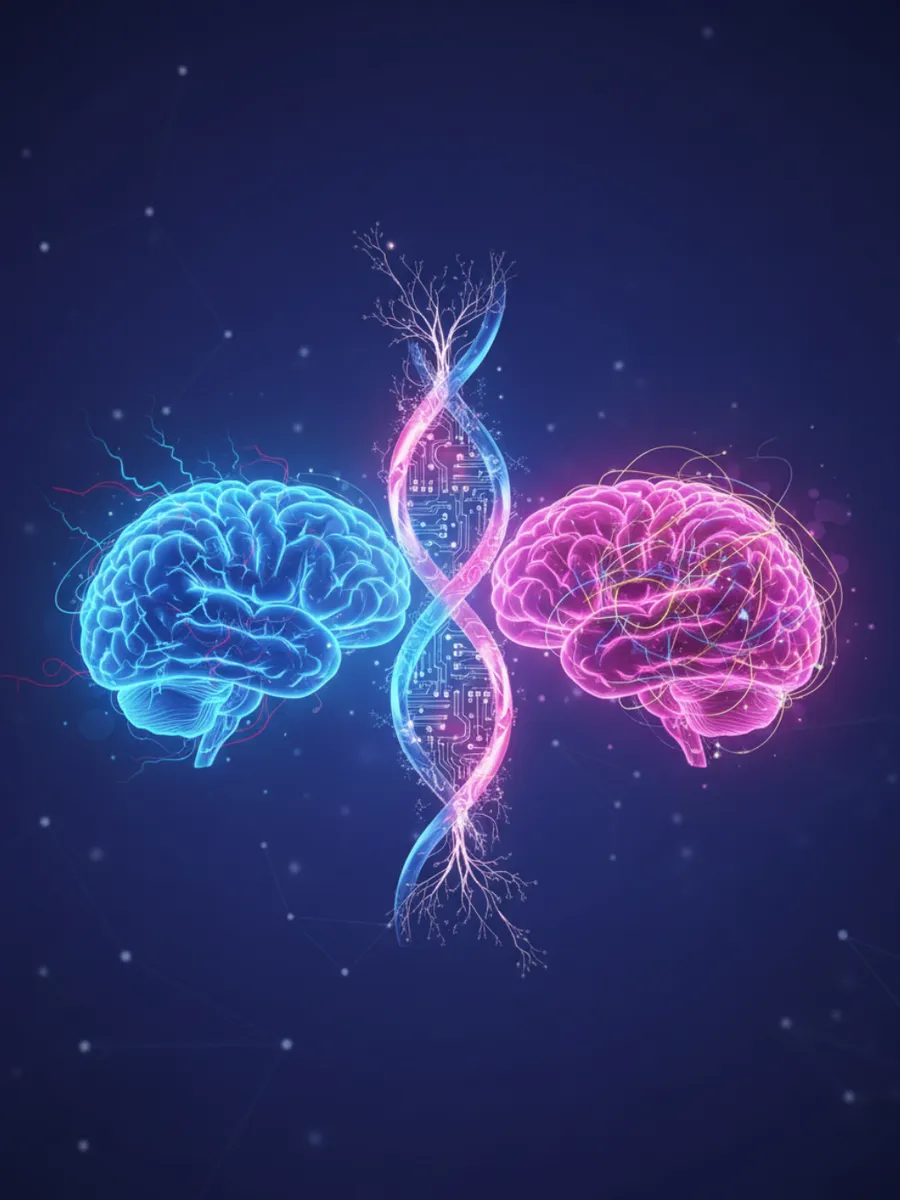
Did you know that men and women use different neural pathways to handle social stress?
Prompted by A NerdSip Learner
Understand the neurobiological differences in how men and women process panic and anxiety.
When you encounter a stressful situation—like a looming deadline or a social conflict—your brain triggers a complex cascade of signals. At the center of this is the HPA axis, a triad consisting of the hypothalamus, the pituitary gland, and the adrenal glands. This system is responsible for pumping out stress hormones like cortisol and adrenaline.
While both men and women rely on this exact same alarm system, neuroscientists have discovered that the *way* the system is dialed up or down can differ significantly between sexes. The brain is incredibly sensitive to our internal chemical environment, meaning our baseline biology influences how we experience panic and anxiety.
Understanding these neurobiological differences isn’t about stereotyping; it’s about recognizing how our unique neural pathways shape our reactions. By learning how your brain processes stress, you can develop better, more personalized strategies to calm your mind when anxiety hits.
Key Takeaway
Both men and women use the HPA axis to respond to stress, but their brains often regulate and process this alarm differently.
Test Your Knowledge
Which system is primarily responsible for releasing stress hormones like cortisol?
For decades, scientists described the universal stress response as "fight or flight." However, modern research suggests this model was heavily based on male biology. While men and women both experience the urge to fight or flee, researchers have identified an alternative stress pathway often more prominent in women: "tend and befriend."
This difference is heavily influenced by brain chemistry. When under stress, the brain releases a hormone called oxytocin, which promotes social bonding and empathy. It is believed that estrogen enhances the calming effects of oxytocin, encouraging women to seek social support during crises.
In contrast, male stress responses are more closely linked to vasopressin—a hormone associated with territorial behavior and aggression. Because testosterone tends to dampen oxytocin's effects, men are often biologically nudged toward a more solitary or confrontational response. Recognizing these chemical nudges helps explain why we seek different comforts after a hard day!
Key Takeaway
The female stress response is often characterized by a "tend and befriend" instinct, heavily modulated by oxytocin and estrogen.
Test Your Knowledge
Which hormone is closely associated with the "tend and befriend" stress response?
The amygdala is a small, almond-shaped structure deep in the brain that acts as the emotional processing center. When you feel sudden panic or anxiety, your amygdala is lighting up. Interestingly, brain imaging studies suggest that men and women tend to rely on different sides of this structure when processing highly stressful emotional memories.
Research indicates that men often show greater activation in the *right* amygdala during emotional stress. The right side is broadly associated with taking physical action and focusing on the central gist of a threat.
Conversely, women tend to show more activation in the *left* amygdala. This side is more closely tied to language, emotional details, and memory. This lateralization might explain why, after a stressful social event, some people want to physically withdraw or act, while others feel an urgent need to talk through every specific detail.
Key Takeaway
Men and women often rely on different hemispheres of the amygdala when processing emotional stress, influencing how they react and remember the event.
Test Your Knowledge
According to brain imaging studies, which part of the amygdala tends to be more active in women during emotional stress?
Not all stress is created equal. The triggers that cause the highest spikes in cortisol often differ between men and women. In laboratory settings using psychosocial stress tests, researchers have observed a fascinating paradox in how different genders react to distinct types of pressure.
Men consistently show greater cortisol reactivity when faced with performance or achievement-based stressors—like being evaluated on a difficult math test or public speaking. The male brain often interprets a threat to status or competence as a major stressor.
On the other hand, studies suggest that women frequently exhibit a stronger biological stress response to social rejection or interpersonal conflicts. For the female brain, navigating complex social dynamics and maintaining relationship harmony can be treated by the nervous system as a high-stakes survival priority. Knowing your primary triggers can help you anticipate and manage your anxiety spikes.
Key Takeaway
Men typically show higher stress responses to achievement-based pressure, while women often react more strongly to interpersonal or social stress.
Test Your Knowledge
In laboratory studies, which type of stressor frequently causes greater cortisol spikes in men?
Our daily emotional resilience isn't just about willpower; it is deeply intertwined with our circulating hormones. Testosterone and estrogen do more than just drive physical characteristics—they act as powerful amplifiers and dampeners for the brain's stress circuitry.
Testosterone generally acts as a buffer against stress. It is known to help down-regulate the HPA axis, meaning it can literally dampen the biological panic response. This is one reason why men might sometimes appear less visibly shaken by certain acute stressors.
Estrogen, however, has a more complex relationship with anxiety. It can actually increase HPA axis reactivity, making the brain more sensitive to stress signals. Because estrogen levels fluctuate throughout the menstrual cycle, women may find that their biological vulnerability to panic and anxiety changes from week to week. Understanding this can foster immense self-compassion during highly anxious days.
Key Takeaway
Testosterone generally dampens the brain's stress response, while fluctuating estrogen levels can temporarily increase sensitivity to stress.
Test Your Knowledge
How does testosterone generally affect the brain's response to acute stress?
When you are stressed, your brain doesn't just activate one region; it relies on complex networks of communication. Functional MRI scans reveal that male and female brains often exhibit different connectivity patterns when navigating anxiety.
In female brains, stress often triggers heightened connectivity between the emotional centers (like the amygdala) and the prefrontal cortex, as well as language-processing areas. This robust cross-talk supports the verbal processing of emotions and helps integrate complex emotional data.
In contrast, male brains under stress frequently show stronger connectivity within networks tied to spatial awareness, sensory processing, and motor execution. Instead of cross-talking between emotion and language centers, the male brain is often prioritizing circuits that prepare the body for immediate, localized physical action. Neither network is "better"—they are just biologically distinct strategies for surviving a perceived threat.
Key Takeaway
Under stress, female brains often prioritize emotion-to-language connectivity, while male brains prioritize emotion-to-action connectivity.
Test Your Knowledge
During a stressful event, what type of brain connectivity is often more prominent in women?
We’ve explored how biology, hormones, and brain lateralization influence our stress responses. But the most exciting discovery in modern neuroscience is *neuroplasticity*—the brain's ability to rewire itself. You are not a prisoner to your biological defaults.
If you know your brain naturally defaults to a "tend and befriend" response, you can consciously seek out supportive communities when panic hits. If you know your brain tends to withdraw and prepare for action, you can deliberately pause to communicate your needs to your loved ones before shutting down.
By recognizing the neurobiological differences in how we process social stress, we can stop judging ourselves—and our partners or peers—for reacting differently. We can use cognitive behavioral techniques to intentionally build new, healthier neural pathways, turning biological instincts into conscious, resilient choices.
Key Takeaway
Understanding your biological stress defaults allows you to use neuroplasticity to consciously build healthier, more effective coping strategies.
Test Your Knowledge
What is "neuroplasticity" in the context of stress management?
Track your progress, earn XP, and compete on leaderboards. Download NerdSip to start learning.