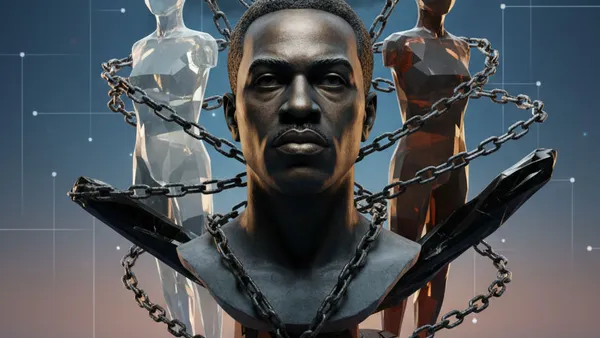
Can a marginalized person become the oppressor? Fred Hampton thought so.
Prompted by NerdSip Explorer #5918
Master Fred Hampton's vision of solidarity.
Fred Hampton was a brilliant, charismatic leader who lived in Chicago during the late 1960s. By the time he was just 21 years old, he had become the deputy chairman of the national Black Panther Party in Illinois.
At a time when America was deeply divided by race, Hampton stood out for his powerful voice and highly advanced political ideas. He didn't just want to talk about fixing problems; he wanted to build entirely new systems to help people survive and thrive in their daily lives.
Under his leadership, the Panthers organized vital community survival programs. They provided free breakfasts for thousands of school children, opened free medical clinics, and taught people their legal rights to protect themselves from police harassment.
But his biggest and most dangerous idea was about who the real "enemy" was. Hampton realized that simply fighting racism with more racial division wasn't going to free his people. This realization led to one of the most remarkable political movements in American history.
Key Takeaway
Fred Hampton was a young, visionary leader of the Black Panther Party who focused on community survival and deep systemic change.
Test Your Knowledge
What was one of Fred Hampton's major community projects?
In the late 1960s, segregation deliberately kept different communities apart. Black, White, and Latino neighborhoods in Chicago often clashed, viewing each other with deep suspicion. But Fred Hampton saw something else entirely: they were all struggling with the same poverty, bad housing, and abusive authority.
Hampton did the unthinkable for that era. He reached out to a poor white group called the Young Patriots and a Puerto Rican group called the Young Lords. He convinced them that their struggles were intimately connected.
Together, they formed the Rainbow Coalition. This groundbreaking alliance proved that poor and marginalized people could put aside intense racial differences to fight for their shared human rights.
Hampton famously believed you don't fight fire with fire—you fight it with water. He declared, "We're going to fight racism not with racism, but we're going to fight with solidarity." He showed the world that unity was the ultimate weapon against oppression.
Key Takeaway
Hampton united Black, White, and Latino groups to fight their shared struggles together.
Test Your Knowledge
How did Fred Hampton believe people should fight racism?
Fred Hampton famously declared: *"We don't hate the white people; we hate the oppressor, whether he be white, black, brown, or yellow."* But what exactly did he mean by this?
To Hampton, an oppressor wasn't defined by their race or their skin color. An oppressor was defined by their *actions* and the *economic system* they upheld. If you held power and used it to exploit, starve, or brutalize poor people, you were the oppressor, plain and simple.
Imagine a game where the rules are entirely rigged against the players. Hampton was saying that the core problem isn't just the specific person currently wearing the referee's shirt; the real problem is the rigged game itself.
He wanted to change the game of capitalism and exploitation entirely, not just swap out the referee for someone who looked like him. True liberation meant dismantling the machinery of oppression, no matter who was operating it at the time.
Key Takeaway
Oppression is defined by a person's exploitative actions and systems of power, not by their skin color.
Test Your Knowledge
How did Hampton view the concept of an "oppressor"?
If we follow Fred Hampton's logic, can a Black person be an oppressor? His answer was a resounding and controversial yes.
Hampton was fiercely critical of what he called "black capitalism." He argued that if a Black business owner or a Black politician treated poor workers just as unfairly as a white boss did, nothing had actually improved for the community. The sting of exploitation was exactly the same.
He frequently used the historical example of Haiti's dictator, "Papa Doc" Duvalier. Duvalier was a Black leader who overthrew white rulers, only to become a brutal, violent oppressor to his own Black citizens.
Hampton taught his followers that putting a Black face on an inherently unfair system doesn't magically make the system fair. If someone uses their wealth and authority to keep others down, they have crossed the line into becoming the oppressor, regardless of their own racial background. Power corrupts when it is used selfishly.
Key Takeaway
Anyone can be an oppressor if they use their power to exploit others, regardless of their own race.
Test Your Knowledge
Why was Hampton critical of "black capitalism"?
Fred Hampton's philosophy completely shifted how we look at social justice and activism. He taught us to look past surface-level differences and focus deeply on the actual mechanics of power, class, and inequality.
When he said he didn't care if his oppressor was black, white, or brown, he was asking society to wake up. He wanted everyday people to stop fighting each other over skin color and start fighting the root causes of human suffering: extreme poverty, corporate greed, and corrupt authority.
Today, his message remains incredibly powerful and relevant. True equality isn't just about making sure every race has a seat at the table of power. It's about making sure that the table itself isn't built on the backs of the poor and marginalized.
If we want to honor his legacy, we must look beyond identity alone. We must ask ourselves who is being exploited, who is benefiting, and how we can stand in true solidarity with everyone fighting for a better world.
Key Takeaway
True social justice means fighting the root systems of inequality, not just changing the faces of those in charge.
Test Your Knowledge
What is the main focus of Hampton's philosophy on fighting oppression?
Track your progress, earn XP, and compete on leaderboards. Download NerdSip to start learning.