Did you know a Samurai preferred death over losing their sense of justice?
Prompted by NerdSip Explorer #9048
Explore the ethical code that governed the life of the warrior class in Japan.
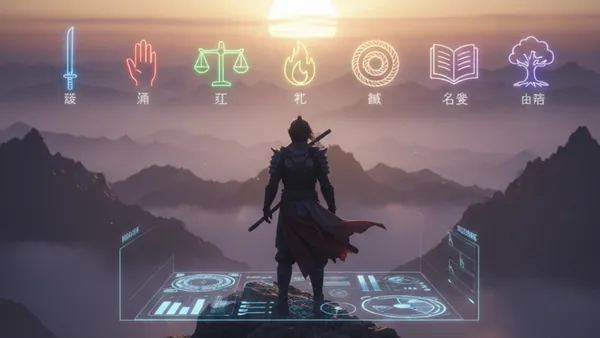
Welcome to the fascinating world of *Bushido*, the "Way of the Warrior." While historical samurai lived by evolving martial codes over centuries, the philosophy we recognize today was famously outlined by Inazo Nitobe in his 1899 book, *Bushido: The Soul of Japan*. He identified seven core virtues, and the first—and arguably most foundational—is *Gi*, or Justice.
For a samurai, *Gi* (also translated as Rectitude) wasn't about finding legal loopholes; it was about unwavering moral rightness. It meant having the clarity of mind to make fair decisions instantly and sticking to the right path regardless of the personal cost.
Think of *Gi* as the absolute backbone of a warrior. Without a strict sense of justice, a samurai's martial skills were considered dangerous and directionless. It is this intense commitment to righteousness that historically led many warriors to prefer death over living with a compromised sense of justice.
Key Takeaway
Gi is the moral compass of the samurai, emphasizing absolute rightness and decisive action over personal gain.
Test Your Knowledge
What does the Bushido virtue of Gi primarily represent?
The second virtue of Bushido is *Yu*, which translates to Courage or Heroic Bravery. But if you picture a samurai rushing blindly into a chaotic battle, you only have half the story!
In the philosophy of Bushido, true courage was never about recklessness or a lack of fear. In fact, needlessly risking one's life was often viewed as foolishness. Instead, *Yu* was intelligent and deeply moral. It meant doing what was right—guided by the first virtue, *Gi* (Justice)—even when facing tremendous fear, adversity, or death.
A samurai cultivated a serene mind to overcome the paralyzing effects of fear. By accepting the fleeting nature of life, they could act with profound clarity and bravery when it truly mattered. Courage was the engine that turned their moral convictions into tangible actions in the world.
Key Takeaway
True courage in Bushido (Yu) is not reckless bravery, but the intelligent and moral strength to do what is right despite fear.
Test Your Knowledge
How does the philosophy of Bushido view reckless behavior in battle?
When you think of a heavily armed, highly trained warrior, "gentleness" probably isn't the first word that comes to mind. Yet, the third virtue of Bushido is *Jin*, which stands for Benevolence, Mercy, or Compassion.
Samurai wielded immense power, including the right to take a life. However, Bushido taught that possessing power without compassion turns a warrior into a mere brute. *Jin* served to balance their lethal skills with deep empathy. It required the warrior to show mercy, protect the weak, and act with a balanced mind.
This virtue reminds us that the highest form of strength is often the restraint not to use it. A true samurai was expected to be as compassionate in times of peace as they were fierce in times of war, proving that empathy is not a weakness, but a hallmark of genuine power.
Key Takeaway
Jin teaches that true strength requires a balance of martial skill and deep compassion for others, especially the vulnerable.
Test Your Knowledge
Why was Jin (Benevolence) considered essential for a heavily armed samurai?
The fourth virtue, *Rei* (Respect or Politeness), goes far beyond simply remembering to say "please" and "thank you." For the samurai, respect was a profound, spiritual practice woven into the fabric of everyday life.
In Bushido, *Rei* is the outward expression of an empathetic heart. It meant treating everything—from the elders in the community to the natural world, and even sworn enemies on the battlefield—with profound dignity. A warrior was expected to show courtesy to an opponent before a duel, acknowledging their mutual humanity and skill.
This level of politeness was never seen as a weakness or a hollow formality. Instead, it was considered a mark of supreme self-control and inner strength. By remaining calm and respectful even in the face of hostility, a samurai demonstrated absolute mastery over their own emotions.
Key Takeaway
Rei is a deep-rooted respect for all things, showing that true courtesy is an expression of self-control and inner strength.
Test Your Knowledge
How was a samurai expected to treat an opponent on the battlefield, according to the virtue of Rei?
In our modern world full of complex contracts and fine print, the fifth virtue of Bushido, *Makoto* (Honesty or Sincerity), is deeply refreshing. For a samurai, speaking the truth was not just a moral suggestion; it was an absolute mandate.
The word *Makoto* implies a complete alignment between what is said and what is done. To a true follower of Bushido, there was no difference between making a promise and completing the action. If a samurai said they would do something, it was as good as done. Historically, they rarely needed written contracts because their word was an unbreakable bond.
Lying or being deceitful was seen as a sign of cowardice and weakness. To be insincere was to compromise one's own soul. By practicing *Makoto*, warriors cultivated a reputation for unbreakable integrity, ensuring they could be implicitly trusted by their lords, their peers, and their families.
Key Takeaway
Makoto represents absolute honesty and sincerity, meaning a warrior's word is an unbreakable promise that requires no contract.
Test Your Knowledge
What does the concept of Makoto suggest about the promises made by a samurai?
We have arrived at *Meiyo*, or Honor. While Inazo Nitobe outlined seven core virtues, *Meiyo* is often viewed as the central pillar that holds the rest of the Bushido framework together.
For the samurai, honor wasn't just about outward reputation or vanity; it was a deeply personal, internal code of conduct. It was the constant awareness of one's own dignity and moral worth. A true warrior lived in a way that ensured their actions would never bring shame to themselves, their family, or their lord.
This intense focus on honor is why a samurai was famously willing to prefer death over a compromised moral compass. If a samurai made a severe error or lost their honor, they might seek to restore it through extreme measures, such as ritualized self-sacrifice. While intense to modern sensibilities, this highlights just how central *Meiyo* was to their very existence.
Key Takeaway
Meiyo (Honor) is the overarching internal compass of the samurai, valuing moral dignity and integrity above life itself.
Test Your Knowledge
Why is Meiyo often considered the central pillar of Bushido?
The final virtue of Bushido is *Chugi*, which translates to Loyalty. In the feudal structure of ancient Japan, loyalty was the very glue that held society together. A samurai's devotion to their lord (the *daimyo*) was absolute and unwavering.
However, *Chugi* was more than just blind obedience to an employer. It was a profound, almost familial commitment to protect and serve those in one's care. This loyalty meant putting the needs of the lord, the clan, and the community far above personal ambition or self-preservation.
True loyalty also required honesty. If a lord was making a catastrophic mistake, a truly loyal samurai was expected to speak up—even at the risk of their own life! Ultimately, *Chugi* taught that our lives are deeply interconnected, and true meaning is found in dedicating oneself to a purpose greater than individual success.
Key Takeaway
Chugi is absolute loyalty and devotion, prioritizing the well-being of one's community and leaders above personal ambition.
Test Your Knowledge
What did true loyalty (Chugi) require of a samurai if their lord was making a terrible mistake?
Track your progress, earn XP, and compete on leaderboards. Download NerdSip to start learning.