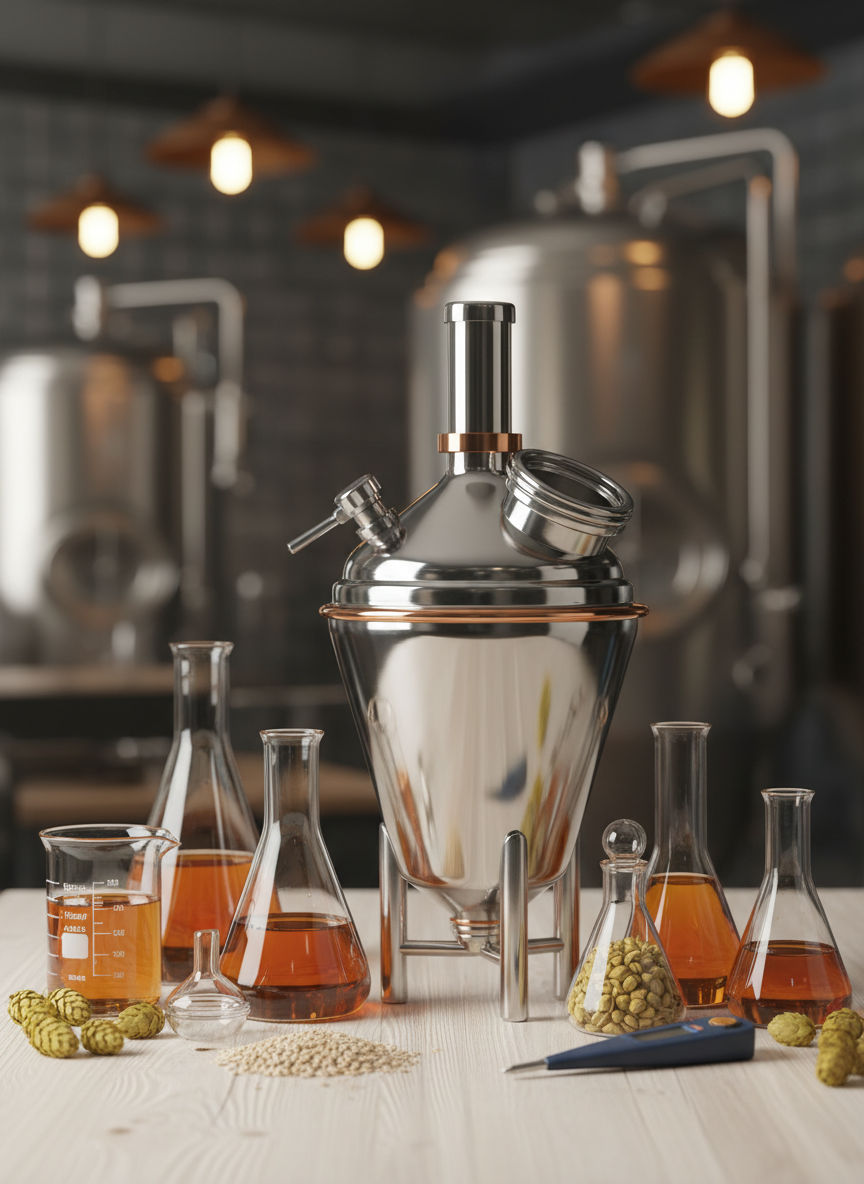
Ever wondered why beer is mostly water but tastes like liquid bread?
Prompted by A NerdSip Learner
Understand the 4 essential ingredients and basic brewing stages.
Welcome to the world of brewing! You don't need a lab coat to make great beer, but you do need to understand the four essential ingredients that make it happen. Almost every beer on the planet starts with just four things: Water, Malt, Hops, and Yeast.
Think of Malt (usually barley) as the soul of the beer. It is similar to bread—it provides the color, the sweetness, and the fuel for the alcohol. Then there is Hops, which are the 'spice' of the beer. These green, cone-shaped flowers add bitterness to balance the sweet malt and provide those amazing floral or citrusy aromas.
Water is often overlooked, but since it makes up about 90-95% of your beer, its quality is vital. Finally, we have Yeast, the tiny living organisms that do the heavy lifting. Without yeast, you would just have a sugary tea. Yeast eats the sugar from the malt and transforms it into the alcohol and bubbles we love.
Key Takeaway
Beer is a simple but magical combination of water, malted grain, hops, and yeast.
Test Your Knowledge
Which ingredient is responsible for adding bitterness and aroma to balance the sweet malt?
Now that we have our ingredients, it is time to start the 'cook.' The first major phase is called Mashing. Imagine making a giant bowl of oatmeal, but instead of eating the oats, you are just after the liquid. By soaking crushed malted grains in hot water, we activate natural enzymes that turn the grain's starch into sugar.
Once we drain away that sweet, sticky liquid—which brewers call Wort (pronounced 'wert')—we move to the Boil. This is where the magic happens! We bring the wort to a rolling boil and add our Hops.
Why boil? First, it kills any unwanted bacteria. Second, it is the only way to extract bitterness from the hops. If you add hops early in the boil, the beer will be more bitter. If you add them at the very end, you get more of those delicious scents. It is a delicate balance of timing that determines whether you are making a light lager or a punchy IPA.
Key Takeaway
Mashing extracts sugar from grain to create a sweet liquid called wort, which is then boiled with hops for flavor.
Test Your Knowledge
What is the name of the sweet, unfermented liquid created during the mashing process?
You have cooked your wort, but it is not beer yet. For that, we need to invite the Yeast to the party. After cooling the liquid down to a safe temperature, we 'pitch' (add) the yeast into a sealed container. This is the Fermentation phase, and it is where the real chemistry happens.
Over the next week or two, the yeast goes on a feeding frenzy. It eats the sugars we extracted from the malt and releases two main byproducts: Alcohol and Carbon Dioxide (the bubbles!). This is why fermentation tanks often have a little 'bubbler' on top—it lets the gas out without letting outside air or germs in.
The final secret ingredient is Patience. Once the yeast is done, the beer often needs time to 'condition.' This allows the flavors to mellow out and become crisp. Finally, the beer is carbonated and packaged into bottles or kegs. While brewing takes a bit of science and a lot of cleaning, the reward is a drink that is uniquely yours!
Key Takeaway
Yeast transforms sugary wort into alcoholic beer by producing ethanol and carbon dioxide during fermentation.
Test Your Knowledge
What are the two main things yeast produces when it eats the sugar in the wort?
Track your progress, earn XP, and compete on leaderboards. Download NerdSip to start learning.