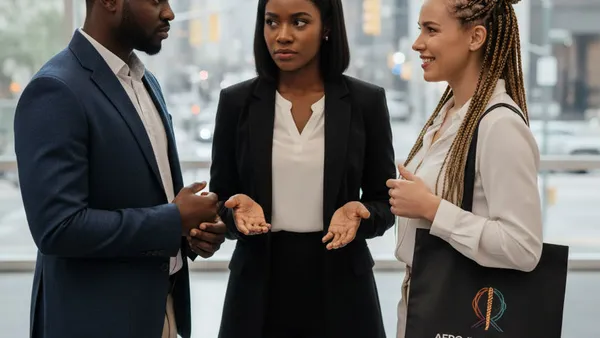
Why does hair spark such intense cultural debates? Unpack the story behind the styles.
Prompted by NerdSip Explorer #5918
Understand the cultural roots and double standards of braiding.
Imagine baking an incredible, unique family recipe that has been passed down for generations. You share a taste with a friend, who then bakes it, claims they invented it, and wins a massive baking contest. That would sting, right? This simple idea helps us understand the complex concept of cultural appropriation. It happens when a dominant culture adopts elements of a minority culture without acknowledging their deep meaning or history.
It is entirely natural to want to participate in things we find beautiful! That is called cultural exchange or appreciation, and it happens when both groups are on equal footing and mutual respect is shown.
However, the frustration around hairstyles like braids isn't usually about the physical hair itself. It is fundamentally about a historical imbalance of power. When marginalized groups create something beautiful, they often don't get the credit. Even worse, they are sometimes punished for it, while others are praised for doing the exact same thing.
Key Takeaway
Cultural appropriation is about adopting elements from another culture while ignoring the power imbalance and history behind them.
Test Your Knowledge
What is the main difference between cultural exchange and cultural appropriation?
To understand the debate around braids, we first need to look closely at their history. For Black communities around the world, braids are so much more than just a fun fashion statement or a convenient way to wear hair. They are a deep-rooted cultural tradition that dates back thousands of years to the African continent.
In many traditional African societies, the specific way your hair was braided could communicate essential details about you. It could show your family background, your age, your marital status, and even your specific role in the community. It was a beautiful, complex language woven right into the hair!
Later on, during periods of immense hardship like enslavement, braids took on a vital role of survival. People used them to secretly hide seeds for planting or even to weave literal maps to freedom. Knowing this heavy, powerful history helps explain why these styles are held so closely to the heart. They are powerful symbols of resilience, identity, and survival.
Key Takeaway
For Black communities, braids represent thousands of years of history, identity, and profound resilience.
Test Your Knowledge
Historically, what did braids communicate in many traditional African societies?
Here is where the frustration really begins to make sense: the concept of the double standard. A double standard is a societal rule or expectation that is unfairly applied in completely different ways to different groups of people.
For decades, Black men and women have faced harsh discrimination simply for wearing their natural hair or traditional braided styles. They have been sent home from schools, denied job opportunities, or told that their hair is "unprofessional." Many institutions even created strict dress codes explicitly banning these very hairstyles.
Yet, when non-Black celebrities or internet influencers wear the exact same braids, fashion magazines and mainstream media often praise them as "trendy," "innovative," or "edgy." It feels deeply unfair and painful to be punished for your own cultural tradition, only to watch someone else be celebrated and rewarded for casually borrowing it. This emotional sting is at the absolute core of the modern hair debate.
Key Takeaway
The frustration comes from a double standard where Black people are penalized for their cultural hairstyles, while non-Black people are praised for wearing them.
Test Your Knowledge
What is the "double standard" in the context of braided hairstyles?
A very common question people ask is: "If a non-Black person pays a Black stylist to do their braids, aren't they supporting a Black business?" The short answer is yes! Economically speaking, paying and supporting a Black-owned salon is a positive action.
However, financial support does not simply erase the societal double standard we just talked about. Think of it this way: buying a ticket to an art museum supports the museum financially, but it doesn't mean you can take a historic painting home and tell everyone you painted it.
While a hair stylist is absolutely happy to be compensated fairly for their immense hard work and talent, the broader cultural frustration still exists outside the salon doors. Money exchanged in a chair cannot fix the systemic, real-world issues where Black people are still actively fighting for legal protection against hair discrimination in the workplace and schools.
Key Takeaway
Supporting Black businesses financially is great, but it doesn't erase the societal double standard regarding who is allowed to wear cultural hairstyles.
Test Your Knowledge
Why doesn't paying a Black stylist completely resolve the frustration around braids?
So, how do we navigate this complex conversation? The goal here isn't to create rigid walls between cultures, but rather to build sturdy bridges of respect. True cultural appreciation requires deep empathy and a sincere willingness to listen.
If you truly love and admire Black culture, the best way to show it is by supporting the community behind the culture. This means actively speaking up against hair discrimination when you see it happening in your workplace, your school, or your social circles. It means amplifying marginalized voices and celebrating Black beauty in its natural form.
When we take the time to understand the "why" behind the frustration, we can move past feeling defensive. We can choose to be genuinely supportive allies instead. By listening to the lived experiences of marginalized groups, we all help create a world where everyone's unique heritage is respected, protected, and honored fairly.
Key Takeaway
True cultural appreciation involves listening, showing empathy, and standing up against discrimination towards the culture you admire.
Test Your Knowledge
Which of the following is an example of true cultural appreciation?
Track your progress, earn XP, and compete on leaderboards. Download NerdSip to start learning.