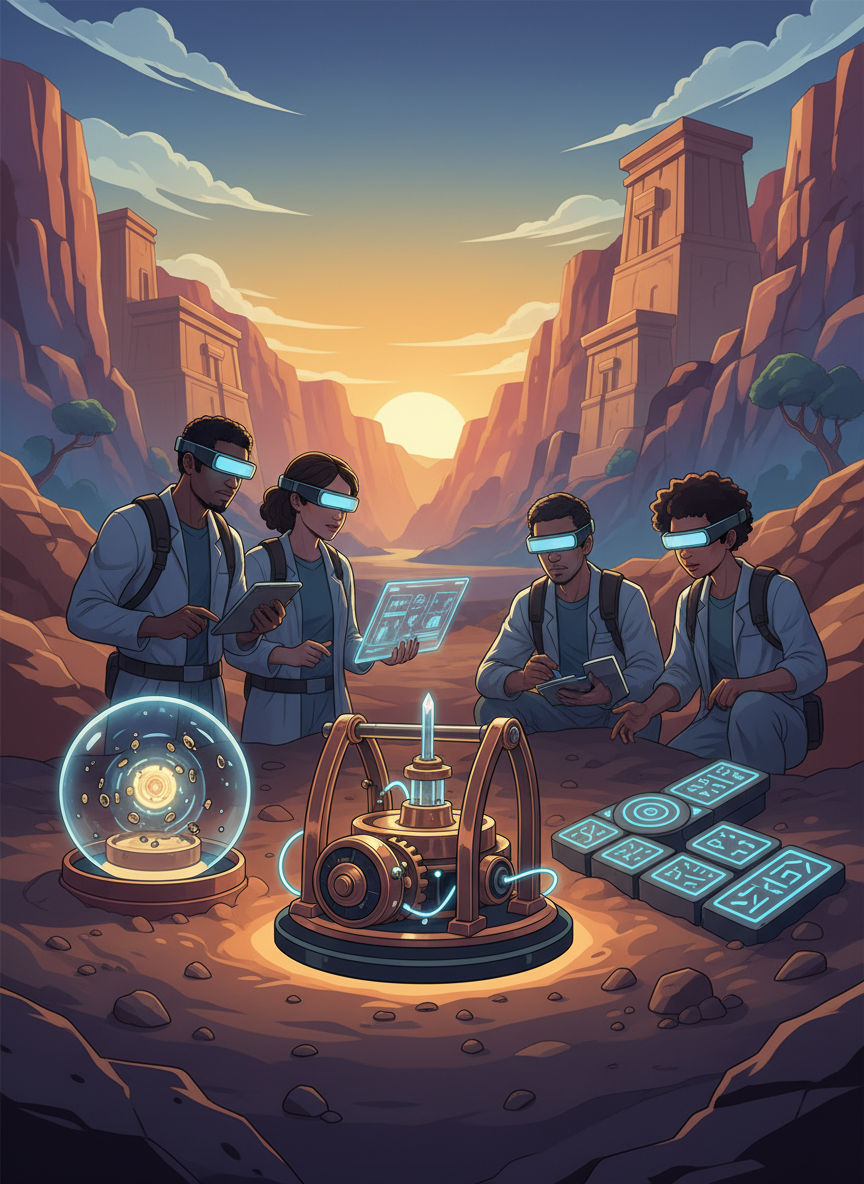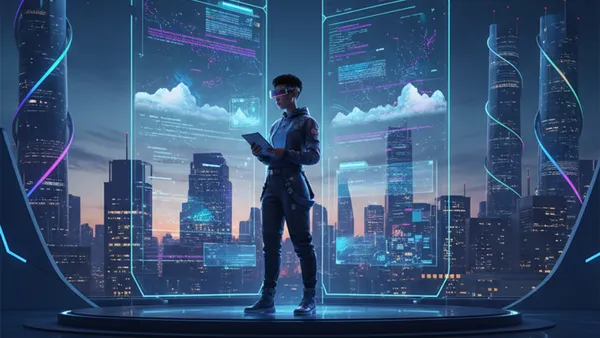
Is our world more Blade Runner or more Her?
Prompted by NerdSip Explorer #6116
Understand the evolution of cyberpunk.
Before we get to the 'post-' part, let's nail down classic cyberpunk. Emerging in the early 1980s, this genre painted a gritty, pessimistic future. The famous motto is "high tech, low life," which perfectly captures its essence. Think incredible technological advancements like cybernetics and global computer networks, set against a backdrop of societal decay, urban squalor, and rampant crime.
In these worlds, multinational corporations have more power than governments. The mood is dark and cynical, often set in rain-soaked, neon-lit cityscapes. The stories typically follow marginalized, alienated outsiders – hackers, data thieves, and street samurai – who are fighting against an oppressive system they can't truly beat.
Key works that defined this era include William Gibson's novel _Neuromancer_ and the film _Blade Runner_. They gave us the iconic imagery and themes of rebellious individuals using technology to survive on the fringes of a dystopian society. Cyberpunk was a warning about where technology and corporate power could lead us.
Key Takeaway
Classic cyberpunk combines futuristic technology with a dark, dystopian vision of society, focusing on rebellious outsiders.
Test Your Knowledge
What is the core motto that best describes the classic cyberpunk genre?
So if that was cyberpunk, what is post-cyberpunk? It's not a complete rejection of the original, but an evolution. Around the late 1990s, writers started to feel that the classic cyberpunk dystopia was a bit... well, stuck in the 80s. The future didn't seem to be shaping up in that exact way.
Post-cyberpunk asks, "What happens after the revolution fails, or just fades away?" It examines worlds where the technological changes cyberpunk predicted have actually happened and become part of everyday life. The technology isn't just for rebels anymore; it's for everyone. The tone is often more realistic and less uniformly grim.
One of the most important shifts is in the protagonists. Instead of alienated outsiders trying to tear down the system, post-cyberpunk heroes are often part of the system – they are cops, engineers, artists, or regular citizens. They use technology to solve problems and live their lives within the complex, messy world, rather than fighting it from the shadows.
Key Takeaway
Post-cyberpunk evolves the genre by exploring characters living within a technologically saturated society, rather than fighting it from the outside.
Test Your Knowledge
What is the main difference between a cyberpunk and a post-cyberpunk protagonist?
While classic cyberpunk is defined by its dystopias, post-cyberpunk settings are much more varied. The world isn't necessarily a paradise, but it's not a complete hellscape either. It's often just... complicated. Much like our own world, but with more advanced tech.
The future in post-cyberpunk is less about total societal collapse and more about societal transformation. The stories explore the nuanced social, political, and personal effects of technology. How does ubiquitous surveillance change neighborly trust? What does a reputation-based economy do to friendship? These are post-cyberpunk questions.
Instead of a single, evil corporation ruling everything, power structures are more complex and decentralized. The stories might take place in a high-tech startup in Silicon Valley, a digitally-enhanced suburb, or a society grappling with nanotech-driven abundance. The world feels more grounded and less like a monolithic, oppressive nightmare.
Key Takeaway
Post-cyberpunk settings move away from pure dystopia to explore more nuanced and complex societies transformed by technology.
Test Your Knowledge
How do the worlds of post-cyberpunk generally differ from classic cyberpunk?
In classic cyberpunk, technology is often portrayed as dangerous, alien, and revolutionary. It's the cyberdeck used to hack the corporate mainframe or the illegal street-implanted cyberarm. It's a weapon for the counter-culture.
In post-cyberpunk, technology has lost its rebellious edge because it's become mundane and ubiquitous. It’s integrated into the fabric of society, much like smartphones and the internet are for us today. The stories aren't about the shock of the new, but the consequences of the normal. The focus is on how people adapt to, use, and are changed by this ever-present technology.
Think about augmented reality overlays on your vision as you walk down the street, smart-dust sensors monitoring the environment, or AI companions that help you organize your life. This tech isn't necessarily good or bad; it's simply the environment everyone lives in. The drama comes from human problems within this new, technologically-saturated context.
Key Takeaway
In post-cyberpunk, technology is no longer a rebellious tool but a normal, integrated part of the everyday environment.
Test Your Knowledge
How is technology typically portrayed in post-cyberpunk stories?
You can't talk about post-cyberpunk without mentioning Neal Stephenson. His work was instrumental in shaping the genre's evolution. His 1992 novel _Snow Crash_ is often seen as a bridge between classic and post-cyberpunk. It has the hackers and punk attitude, but with a more satirical and sprawling tone.
However, his 1995 novel _The Diamond Age_ is arguably the quintessential post-cyberpunk text. It's set in a future where nanotechnology has radically reshaped society, creating new cultural tribes and forms of governance. The plot centers on an interactive book designed to educate a young girl, exploring themes of education, social mobility, and artificial intelligence.
Unlike the grim tone of early cyberpunk, _The Diamond Age_ presents a world full of complex problems but also incredible possibilities. It perfectly incapsulates the post-cyberpunk ethos: examining the intricate, often messy, societal implications of a world that has already been transformed by technology.
Key Takeaway
Neal Stephenson's novels, especially _The Diamond Age_, are foundational texts that define post-cyberpunk's focus on complex societal change.
Test Your Knowledge
Neal Stephenson's novel _The Diamond Age_ is a key post-cyberpunk work that focuses on the societal impact of what technology?
Beyond Stephenson, other authors have powerfully shaped the post-cyberpunk landscape. Cory Doctorow is a prominent voice whose work often explores themes of digital rights, freedom of information, and surveillance.
His novel _Down and Out in the Magic Kingdom_ is a fantastic example. It's set in a future where death has been cured and society runs on "Whuffie," a currency based on reputation. It’s not a dark dystopia; it's a fascinating look at how social dynamics change when basic needs are met and reputation is everything. This focus on social systems over corporate warfare is pure post-cyberpunk.
Another key figure is Charles Stross. His work, like the novel _Accelerando_, often pushes into even more radical territory, dealing with concepts like the Technological Singularity (the point where AI growth becomes uncontrollable and irreversible) and transhumanism. Stross explores the sheer weirdness and incomprehensibility of a future where technological change is accelerating exponentially.
Key Takeaway
Authors like Cory Doctorow and Charles Stross expanded post-cyberpunk to explore reputation economies, digital rights, and the technological singularity.
Test Your Knowledge
Cory Doctorow's work often explores societies that run on what kind of non-monetary currency?
Post-cyberpunk isn't just limited to books; its themes are all over film and television. A perfect example is the anime series _Ghost in the Shell: Stand Alone Complex_. While the original manga and 1995 film are classic cyberpunk, this series is post-cyberpunk through and through.
Its heroes, Section 9, are not anti-establishment rebels. They are an elite, government-sponsored cybercrime task force. They use the system's own high-tech tools to hunt down hackers, terrorists, and corrupt officials. The series delves into complex political intrigue, the nature of consciousness in a networked society, and the ethics of cybernetic warfare, all from an 'insider' perspective.
More recently, the film _Her_ (2013) showcases a softer, more personal side of post-cyberpunk. It explores the emotional landscape of a near-future where a man falls in love with his advanced AI operating system. The technology is seamless and integrated, and the story focuses on the very human themes of love, loneliness, and connection in a technologically mediated world.
Key Takeaway
Shows like _Ghost in the Shell: Stand Alone Complex_ and films like _Her_ exemplify post-cyberpunk on screen by focusing on insiders and personal relationships with technology.
Test Your Knowledge
Why is _Ghost in the Shell: Stand Alone Complex_ considered a post-cyberpunk series?
As you explore post-cyberpunk, you'll likely run into its close relative: biopunk. While cyberpunk and post-cyberpunk are primarily concerned with information technology, cybernetics, and AI, biopunk shifts the focus to a different kind of tech: biotechnology.
Biopunk stories grapple with the social and ethical fallout of genetic engineering, synthetic biology, and human cloning. The 'punk' element comes from the unauthorized use of these technologies, with 'gene-hackers' and black market clinics replacing the computer hackers of cyberpunk. The film _Gattaca_ is a classic biopunk example, exploring a society driven by eugenics where people are defined by their DNA.
Why is it a cousin to post-cyberpunk? Because both genres are fundamentally about the same thing: how humanity adapts (or fails to adapt) to transformative technologies. They examine how our tools reshape our society, our bodies, and our very definition of what it means to be human. Often, you'll find stories that blend elements of both.
Key Takeaway
Biopunk is a related genre that explores the societal impact of biotechnology and genetic engineering, rather than just information technology.
Test Your Knowledge
What is the main technological focus of the biopunk genre?
Here's the most fascinating thing about post-cyberpunk: it might be the most accurate predictive genre of the last 30 years. Many of its core themes and technologies are no longer science fiction; they are our daily reality. The genre wasn't just predicting the future, it was examining the present that was just around the corner.
Think about it. We live in a world of ubiquitous surveillance through social media and smart devices. We have gig economies that reshape work, and reputation scores on apps that determine our access to services. We are grappling with the political impact of misinformation spread through global networks and the ethics of developing AI.
Post-cyberpunk gave us a framework for thinking about these complex issues. It moved beyond the simple 'evil corporation' narrative to a more nuanced view of how technology, society, and humanity co-evolve. So, next time you ask your AI assistant a question or scroll through your social feed, remember: you're not just using technology, you're living inside a post-cyberpunk novel.
Key Takeaway
Many themes of post-cyberpunk, like ubiquitous surveillance and reputation economies, are now part of our everyday modern reality.
Test Your Knowledge
What is a key reason post-cyberpunk feels so relevant today?
Track your progress, earn XP, and compete on leaderboards. Download NerdSip to start learning.