Your chest tightens when you read about the latest AI model. Your stomach drops when a colleague mentions automating part of your job. You scroll through LinkedIn posts about AI productivity gains and feel something between dread and nausea. This is not weakness. This is neuroscience.
The anxiety you feel about artificial intelligence is real, measurable, and, from an evolutionary perspective, perfectly logical. Your brain is running threat-detection software that was designed for predators on the savanna, and it has identified something in your environment that looks, to its ancient circuitry, like it might kill you. Not physically. Professionally. Socially. Existentially.
This article is a deep dive into the neuroscience of that response. Not a self-help listicle. Not a reassurance that everything will be fine. Instead, a careful examination of what is actually happening in your brain when AI makes you anxious, why that response exists, and how understanding the mechanism changes your relationship with it.
The Amygdala Does Not Read Job Descriptions
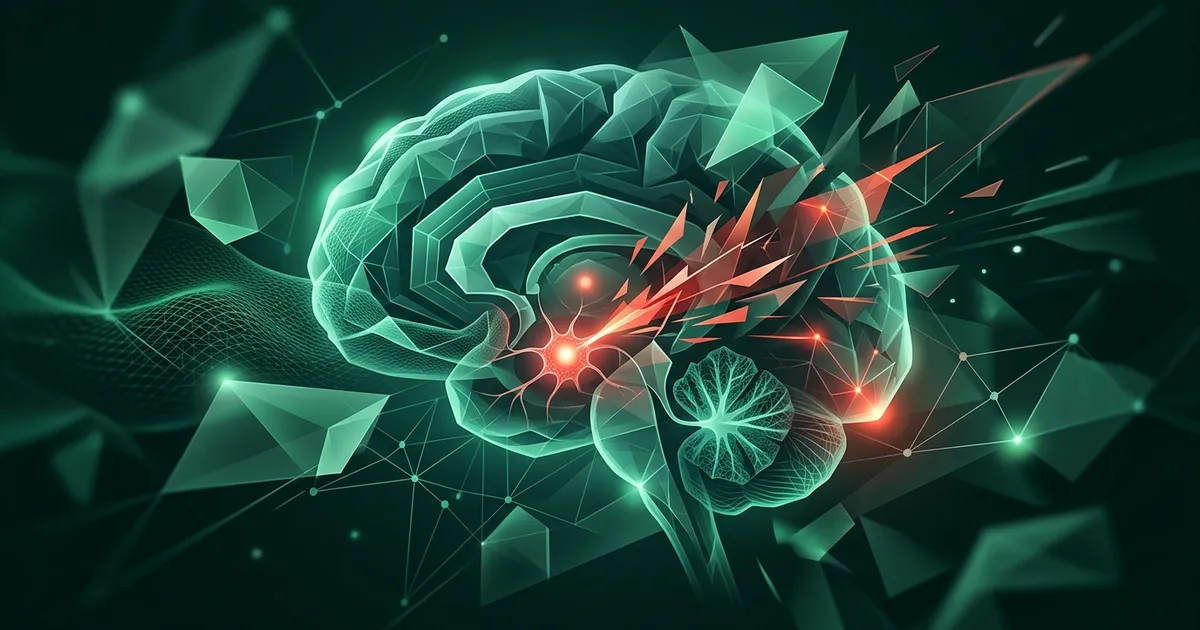
The amygdala is a small, almond-shaped structure buried deep in the medial temporal lobe. It is arguably the most studied region in threat neuroscience. Joseph LeDoux's landmark work at New York University established that the amygdala serves as the brain's rapid threat-evaluation system, processing potentially dangerous stimuli before conscious awareness even registers them (LeDoux, 1996). His research demonstrated two parallel pathways for threat processing: a fast, crude "low road" that bypasses the cortex entirely, and a slower, more detailed "high road" that involves cortical analysis.
The low road exists because speed matters more than accuracy when survival is at stake. A rustle in the grass might be a snake or might be the wind. The amygdala does not wait to find out. It triggers the fight-or-flight response first and lets the cortex sort out the details later. False alarms are cheap. Missed threats are fatal.
Here is what matters for AI anxiety: the amygdala responds to uncertainty and potential loss, not just physical danger. Grupe and Nitschke (2013) published a comprehensive review in Nature Reviews Neuroscience demonstrating that uncertainty is one of the most potent activators of the amygdala. Their model showed that anxious brains are particularly sensitive to ambiguous information, interpreting uncertain stimuli as threatening by default.
AI is, by its nature, radically uncertain. Nobody knows how capable the next model will be. Nobody knows which jobs will be automated next year. Nobody knows whether their specific skills will retain market value. This is precisely the kind of open-ended, unresolvable ambiguity that the amygdala treats as a five-alarm fire.
The neurological response is identical to what your ancestors experienced when they heard a predator's call at dusk. Cortisol floods your bloodstream. Your heart rate increases. Your prefrontal cortex, the part of your brain responsible for rational planning and nuanced analysis, gets partially shut down as resources are redirected to survival circuits. This is why you cannot think clearly about AI when you are anxious about it. The very system you need for calm, strategic assessment is being suppressed by the system that is screaming "danger."
The Stress Response Was Not Built for Abstract Threats
The hypothalamic-pituitary-adrenal (HPA) axis is the body's primary stress-response system. When the amygdala detects a threat, it signals the hypothalamus, which triggers a cascade that ultimately releases cortisol from the adrenal glands. This system evolved for acute, physical emergencies. A burst of cortisol sharpens reflexes, increases pain tolerance, and floods muscles with glucose. For a ten-minute sprint from a predator, it is brilliant engineering.
Career anxiety lasts months. Sometimes years.
Robert Sapolsky's work at Stanford, detailed extensively in Why Zebras Don't Get Ulcers (2004), demonstrated the devastating consequences of chronic activation of a stress system designed for acute threats. Sustained cortisol elevation impairs hippocampal function (damaging memory formation and retrieval), suppresses immune function, disrupts sleep architecture, and, most relevant to our topic, impairs the prefrontal cortex's capacity for flexible, abstract reasoning.
This creates a vicious cycle. AI anxiety activates the stress response. The stress response impairs your ability to think strategically about AI. Your inability to think strategically increases your sense of helplessness. Your sense of helplessness increases your anxiety. The loop tightens.
Sapolsky's key insight was that humans are unique among primates in their ability to trigger the full stress response through anticipation alone. You do not need to actually lose your job to experience the neurobiological consequences of job loss. Imagining it is sufficient. Reading an article about layoffs at a company you do not even work for can activate the HPA axis. The brain simulates threats with remarkable fidelity, and the body responds to the simulation as if it were real.
This is why scrolling through AI news can feel physically exhausting. It is not metaphorical fatigue. Your body is spending real metabolic resources responding to each piece of threatening information as if it were an immediate survival challenge.
Status Anxiety: The Social Brain Under Siege
Humans are intensely social primates. Our brains devote enormous resources to tracking social hierarchies, assessing our relative standing, and predicting how others perceive us. This is not vanity. For most of human evolutionary history, social status was directly linked to survival. Higher-status individuals had better access to food, mates, protection, and alliance networks. Being low-status was genuinely dangerous.
The neural infrastructure for status monitoring is ancient and powerful. Zink and colleagues (2008) used fMRI imaging to demonstrate that the brain's reward and threat circuits respond to changes in social rank. Gaining status activates the ventral striatum, the same reward center activated by food and sex. Losing status activates the amygdala and anterior insula, regions associated with threat detection and social pain.
Naomi Eisenberger's research at UCLA showed that social exclusion and physical pain share overlapping neural substrates (Eisenberger, Lieberman, & Williams, 2003). The brain processes being left out with some of the same circuitry it uses to process a broken bone. The term "social pain" is not a metaphor. It is a description of neural architecture.
AI disrupts status hierarchies in a way that is historically unprecedented. Skills that once conferred high social and professional standing, writing, coding, analysis, design, are now performed by systems that operate faster and, in many cases, at comparable or higher quality. The person who spent a decade mastering a craft watches an AI reproduce it in seconds. What happens in the brain is predictable: the status-monitoring system detects a rapid, involuntary decline in relative standing, and it sounds the alarm.
This is compounded by social media, which turns status comparison into a continuous, high-frequency activity. Every post about someone using AI to 10x their productivity is, to your social brain, a data point suggesting that others are rising while you stand still. Leon Festinger's social comparison theory (1954) predicted this dynamic: when objective standards for self-evaluation are unavailable, people compare themselves to others. In the AI era, the "others" now include non-human systems that set an impossibly high benchmark.
The "Left Behind" Feeling: Evolutionary Mismatch in Real Time
Evolutionary psychologists use the term "mismatch" to describe situations where an evolved psychological mechanism encounters an environment radically different from the one it was designed for. The classic example is the human craving for sugar and fat, which was adaptive in an environment of caloric scarcity but maladaptive in a world of unlimited fast food.
AI anxiety is an evolutionary mismatch of extraordinary scale.
The fear of being left behind by your group is one of the oldest and most powerful human anxieties. In ancestral environments, separation from the group meant near-certain death. Individuals who felt intense distress when they perceived the group moving on without them were more likely to take action to keep up, and thus more likely to survive. This anxiety was adaptive. It kept you with the tribe.
The modern version of this fear, the sense that technology is advancing faster than you can adapt, that your peers are embracing tools you have not mastered, that the professional landscape is shifting beneath you, activates the same neural circuits. The anterior cingulate cortex (ACC), which monitors for discrepancies between your current state and your goals, flags a growing gap between where you are and where you believe you need to be (Botvinick, Cohen, & Carter, 2004). The dorsal ACC in particular has been linked to the detection of social exclusion and the distress that accompanies it.
But there is a critical difference between the ancestral version and the modern one. On the savanna, the group moved at the speed of human legs. You could always catch up. The gap between you and the group had a natural ceiling. In the AI era, the reference point is accelerating exponentially. Moore's Law applied to social anxiety. The gap feels like it is widening faster than you can close it, not because you are slow, but because the thing you are measuring yourself against is not constrained by biology.
This mismatch explains why the anxiety feels so disproportionate to the actual, present-moment situation. You still have your job. You still have your skills. Nothing bad has happened yet. But the ancient circuitry does not care about the present moment. It cares about the trajectory, and the trajectory looks, to a brain wired for tribal survival, like the group is disappearing over the horizon.
How the Brain Processes Career Threats vs. Physical Threats
Neuroscience draws a useful distinction between two types of threat processing: reactive (response to an immediate, present danger) and anticipatory (response to a predicted future danger). These activate overlapping but distinct neural circuits.
Reactive threat processing is dominated by the amygdala and periaqueductal gray (PAG), producing rapid, reflexive responses: freeze, fight, or flee. This is what happens when a car runs a red light in front of you. The response is fast, automatic, and largely unconscious.
Anticipatory threat processing involves a broader network that includes the amygdala but also heavily recruits the prefrontal cortex, anterior cingulate cortex, and insula. This is the circuitry of worry, rumination, and catastrophic thinking. It runs simulations. It models worst-case scenarios. It tries to prepare you for something that has not happened yet and may never happen.
AI anxiety is almost entirely anticipatory. The threat is abstract, temporally diffuse, and probabilistic. You are not running from anything. You are modeling a future in which your skills become obsolete, your career loses its trajectory, and your professional identity dissolves. The brain treats this simulation with near-physical seriousness.
Daniel Kahneman and Amos Tversky's prospect theory (1979) adds another layer. Their research demonstrated that humans experience losses approximately twice as intensely as equivalent gains. A dollar lost feels about twice as bad as a dollar gained feels good. This asymmetry, known as loss aversion, means that the potential loss of career status, income, and professional identity looms much larger in the brain's threat calculus than any potential gain from AI adoption.
This is why rational arguments about AI creating new jobs rarely reduce AI anxiety. The gain is hypothetical and vague ("new opportunities will emerge"). The loss is specific and personal ("my specific skills might become worthless"). Loss aversion ensures that the concrete, specific loss dominates the emotional calculus, regardless of the probabilistic argument about aggregate employment.
Why AI Triggers Impostor Syndrome
Impostor syndrome, first described by Clance and Imes (1978), is the persistent feeling that you are less competent than others perceive you to be, combined with a fear of being "found out." It is remarkably common among high achievers. Estimates suggest it affects roughly 70% of people at some point in their lives (Sakulku & Alexander, 2011).
AI has introduced a novel catalyst for impostor syndrome that the original researchers could not have anticipated: a non-human reference point for competence.
Traditionally, impostor syndrome involves comparing yourself to other humans and concluding that you fall short. The comparison, while distorted, is at least on the same playing field. AI breaks this entirely. When a system produces in seconds what took you weeks to learn, it does not just make you feel slow. It makes you question whether the skill itself, the thing you built your identity around, ever had the value you assigned to it.
The neural mechanism is illuminating. The anterior cingulate cortex (ACC) functions as an error-detection system, monitoring for discrepancies between expected and observed outcomes (Gehring & Willoughby, 2002). When you watch an AI perform your skill effortlessly, the ACC registers a discrepancy: the expected difficulty of the task does not match the observed ease of execution. This triggers a reevaluation of your own competence. If the task is that easy, what does it mean that it took you years to master it?
The answer, of course, is nuanced. Human skill involves judgment, context, taste, and the ability to define problems, not just solve them. But the ACC does not do nuance. It flags the discrepancy and generates an error signal that the prefrontal cortex must then interpret. Under conditions of existing self-doubt, that interpretation tends to skew negative: "I was never as good as I thought I was."
This is compounded by what psychologists call the effort heuristic. People tend to value outcomes in proportion to the effort required to produce them (Kruger, Wirtz, Van Boven, & Altermatt, 2004). A painting that took a month feels more valuable than one that took an hour, independent of quality. When AI reduces the effort required for skilled output to near zero, it disrupts this heuristic in a way that devalues the output and the skill simultaneously. The result feels like the floor has been pulled out from under your professional identity.
The Uncertainty Tax: Why Your Brain Cannot "Just Adapt"
Well-meaning advice about AI often boils down to a simple instruction: adapt. Learn to use the tools. Embrace the change. Upskill. The implicit assumption is that this is primarily a practical problem. Learn the new thing, and the anxiety will go away.
The neuroscience says otherwise.
Intolerance of uncertainty (IU) is a well-studied construct in clinical psychology, defined as the tendency to react negatively to uncertain situations regardless of their probability (Dugas, Gagnon, Ladouceur, & Freeston, 1998). Research has shown that IU is a stronger predictor of worry and generalized anxiety than the actual probability of negative outcomes. In other words, it is not the likelihood of AI taking your job that drives anxiety. It is the not knowing.
Learning to use AI tools does not resolve this uncertainty. It might even amplify it. The more you understand about AI capabilities, the more clearly you see how fast those capabilities are advancing, and the less confident you become in any prediction about the future. The expert is often more anxious than the novice, because the expert has a more accurate model of how much they do not know.
Neuroimaging studies by Hsu and colleagues (2005) demonstrated that ambiguous situations, where probabilities are unknown, activate the amygdala and orbitofrontal cortex significantly more than risky situations, where probabilities are known. A 30% chance of job loss is less anxiety-provoking than an unknown chance of job loss. The AI landscape offers almost pure ambiguity. Nobody can assign reliable probabilities. This is the worst possible configuration for a brain that uses uncertainty as a proxy for danger.
The Prefrontal Cortex: Your Best Tool (When It Is Online)
The prefrontal cortex (PFC) is the brain's executive center. It handles abstract reasoning, future planning, emotional regulation, and the ability to override automatic impulses. It is, in a very real sense, the part of your brain that can evaluate whether the amygdala's alarm is warranted and choose a measured response instead of a reflexive one.
The problem is that chronic stress degrades PFC function. Amy Arnsten's research at Yale has demonstrated that even moderate, sustained stress impairs prefrontal circuits, shifting the brain toward more reflexive, amygdala-driven processing (Arnsten, 2009). This is the neurobiological basis for why anxious people make worse decisions. It is not a character flaw. It is a resource allocation problem. Under stress, the brain prioritizes survival circuits over planning circuits.
This means that AI anxiety, left unaddressed, creates a neurological environment that makes it harder to do the very thing that would help: think clearly about your relationship with AI and make strategic decisions about your career.
The research on restoring PFC function points to several evidence-based interventions. Mindfulness meditation has been shown to strengthen prefrontal control over amygdala reactivity (Creswell, Way, Eisenberger, & Lieberman, 2007). Aerobic exercise promotes neurogenesis in the hippocampus and enhances PFC connectivity (Hillman, Erickson, & Kramer, 2008). And, most relevant to this article, cognitive reappraisal, the deliberate reframing of a threat as a challenge, has been shown to reduce amygdala activation and enhance PFC engagement (Ochsner & Gross, 2005).
Affect Labeling: The Simplest Tool That Works
Matthew Lieberman and colleagues at UCLA discovered something remarkable in a 2007 study: the simple act of putting feelings into words, a process they called affect labeling, significantly reduced amygdala activation in response to threatening stimuli (Lieberman et al., 2007). Participants who labeled their emotional experience while viewing frightening images showed less amygdala response than those who simply observed the images.
The mechanism appears to involve the right ventrolateral prefrontal cortex, which activates during labeling and appears to exert a dampening effect on the amygdala. In essence, naming the emotion recruits executive circuits that modulate the threat response.
This has a direct application to AI anxiety. The difference between "I feel terrible about AI" and "I am experiencing amygdala-driven threat detection in response to career uncertainty" is not just semantic. The second framing activates prefrontal circuits. It transforms an overwhelming emotional experience into an object of analysis. You are no longer inside the anxiety. You are observing it.
This is not a cure. The anxiety does not disappear. But it shifts from being something that happens to you to something you can work with. The alarm still sounds. You just develop the ability to hear it without running.
Rewriting the Threat Calculus
Understanding the neuroscience of AI anxiety does not make AI less disruptive. It does not guarantee your job is safe. It does not resolve the genuine uncertainty about where this technology is headed. What it does is something more precise and, arguably, more valuable: it gives you a map of your own reaction.
When you know that your amygdala responds to uncertainty as if it were a predator, you can recognize the alarm without obeying it. When you know that loss aversion makes potential losses feel twice as large as equivalent gains, you can adjust your mental accounting. When you know that status anxiety activates the same circuits as physical pain, you can treat your response with the seriousness it deserves instead of dismissing it as irrational.
The anxiety is not irrational. It is a rational system responding to a genuinely novel input with the only tools it has. The tools are old. The input is new. The mismatch is the problem, not you.
Several principles emerge from the research:
Name it to tame it. Lieberman's affect labeling research shows that articulating what you feel, with specificity, reduces amygdala reactivity. "I am anxious about AI" is a start. "I am experiencing status anxiety because I saw someone use AI to do something I thought was my competitive advantage" is better. Precision recruits the prefrontal cortex.
Reduce ambiguity where you can. You cannot eliminate uncertainty about AI's trajectory. But you can reduce ambiguity in your own domain. Learn what the current tools can and cannot do. Assess, concretely, which of your skills are most and least vulnerable. Specificity replaces the amorphous dread of "AI will take everything" with a manageable assessment of actual risk.
Distinguish between the signal and the noise. Your threat-detection system is sensitive. That is its job. But sensitivity means false positives. Not every AI headline is a personal threat. Not every new model changes your situation. Train yourself to ask: "Is this information actionable for me, right now?" If the answer is no, the amygdala's alarm is noise, not signal.
Protect your prefrontal cortex. Sleep, exercise, and stress management are not luxuries. They are infrastructure. Your ability to think strategically about your career in the age of AI depends on the functional integrity of your PFC. Chronic sleep deprivation, sedentary behavior, and unmanaged stress all degrade exactly the cognitive capacity you need most.
Redefine the reference point. Social comparison is automatic, but the reference point is not fixed. You get to choose who and what you measure yourself against. Comparing yourself to an AI system is like comparing your running speed to a car. The comparison is technically valid and completely useless. Compare yourself to where you were six months ago. That is a metric your brain can work with.
Conclusion: The Alarm Is Real. So Is Your Agency.
Your brain is treating AI like a threat because, by every metric the amygdala uses, it is one. It introduces massive uncertainty. It disrupts status hierarchies. It devalues effort-based skill assessments. It triggers loss aversion by threatening specific, personal resources. It activates the ancient fear of being separated from the group.
All of this is real. None of it is pathological. You are experiencing the predictable output of a threat-detection system that kept your ancestors alive for two hundred thousand years. The system works. It is just calibrated for a different world.
Understanding the mechanism does not make the feeling disappear. But it does something equally important. It gives you a choice. When the alarm sounds, you can observe it, label it, understand its origin, and then decide, with your prefrontal cortex fully engaged, what to do next.
That is the difference between being afraid and being anxious. Fear is a response to a present danger. Anxiety is a response to a possible future. The future is not fixed. Your ancient brain does not know that. Your modern brain does.
Use it.
References
- Arnsten, A. F. T. (2009). Stress signalling pathways that impair prefrontal cortex structure and function. Nature Reviews Neuroscience, 10(6), 410–422.
- Botvinick, M. M., Cohen, J. D., & Carter, C. S. (2004). Conflict monitoring and anterior cingulate cortex: An update. Trends in Cognitive Sciences, 8(12), 539–546.
- Clance, P. R., & Imes, S. A. (1978). The impostor phenomenon in high achieving women: Dynamics and therapeutic intervention. Psychotherapy: Theory, Research & Practice, 15(3), 241–247.
- Creswell, J. D., Way, B. M., Eisenberger, N. I., & Lieberman, M. D. (2007). Neural correlates of dispositional mindfulness during affect labeling. Psychosomatic Medicine, 69(6), 560–565.
- Dugas, M. J., Gagnon, F., Ladouceur, R., & Freeston, M. H. (1998). Generalized anxiety disorder: A preliminary test of a conceptual model. Behaviour Research and Therapy, 36(2), 215–226.
- Eisenberger, N. I., Lieberman, M. D., & Williams, K. D. (2003). Does rejection hurt? An fMRI study of social exclusion. Science, 302(5643), 290–292.
- Festinger, L. (1954). A theory of social comparison processes. Human Relations, 7(2), 117–140.
- Gehring, W. J., & Willoughby, A. R. (2002). The medial frontal cortex and the rapid processing of monetary gains and losses. Science, 295(5563), 2279–2282.
- Grupe, D. W., & Nitschke, J. B. (2013). Uncertainty and anticipation in anxiety: An integrated neurobiological and psychological perspective. Nature Reviews Neuroscience, 14(7), 488–501.
- Hillman, C. H., Erickson, K. I., & Kramer, A. F. (2008). Be smart, exercise your heart: Exercise effects on brain and cognition. Nature Reviews Neuroscience, 9(1), 58–65.
- Hsu, M., Bhatt, M., Adolphs, R., Tranel, D., & Camerer, C. F. (2005). Neural systems responding to degrees of uncertainty in human decision-making. Science, 310(5754), 1680–1683.
- Kahneman, D., & Tversky, A. (1979). Prospect theory: An analysis of decision under risk. Econometrica, 47(2), 263–291.
- Kruger, J., Wirtz, D., Van Boven, L., & Altermatt, T. W. (2004). The effort heuristic. Journal of Experimental Social Psychology, 40(1), 91–98.
- LeDoux, J. E. (1996). The Emotional Brain: The Mysterious Underpinnings of Emotional Life. Simon & Schuster.
- Lieberman, M. D., Eisenberger, N. I., Crockett, M. J., Tom, S. M., Pfeifer, J. H., & Way, B. M. (2007). Putting feelings into words: Affect labeling disrupts amygdala activity in response to affective stimuli. Psychological Science, 18(5), 421–428.
- Ochsner, K. N., & Gross, J. J. (2005). The cognitive control of emotion. Trends in Cognitive Sciences, 9(5), 242–249.
- Sakulku, J., & Alexander, J. (2011). The impostor phenomenon. International Journal of Behavioral Science, 6(1), 73–92.
- Sapolsky, R. M. (2004). Why Zebras Don't Get Ulcers (3rd ed.). Holt Paperbacks.
- Zink, C. F., Tong, Y., Chen, Q., Bassett, D. S., Stein, J. L., & Meyer-Lindenberg, A. (2008). Know your place: Neural processing of social hierarchy in humans. Neuron, 58(2), 273–283.
Frequently Asked Questions
Why does AI make me feel anxious even though it is not a physical threat?
Your amygdala, the brain's threat-detection center, evolved to respond to uncertainty and potential loss, not just physical danger. Career displacement, status loss, and identity threats activate the same neural alarm system as predators did for your ancestors. The amygdala cannot tell the difference between a tiger and a technology that might make your skills obsolete. Both register as existential threats.
Is AI anxiety a real psychological phenomenon?
Yes. Research shows that uncertainty about future outcomes activates the amygdala and hypothalamic-pituitary-adrenal (HPA) axis, producing genuine stress responses including elevated cortisol, increased heart rate, and impaired prefrontal cortex function. AI anxiety involves measurable neurobiological changes, not just subjective worry.
Can understanding the neuroscience of AI anxiety actually reduce it?
Research by Lieberman and colleagues at UCLA demonstrated that the simple act of labeling an emotion, called affect labeling, reduces amygdala activation. Understanding that your anxiety is a predictable, well-studied neurological response gives you cognitive distance from it. You still feel the alarm, but you can evaluate it rather than being controlled by it.
How does AI trigger impostor syndrome?
AI creates a new, non-human reference point for competence. When a system produces in seconds what took you years to master, it disrupts your internal model of how skill relates to value. This comparison activates the same self-doubt circuits involved in impostor syndrome: the anterior cingulate cortex flags a discrepancy between your perceived ability and the apparent standard, triggering feelings of fraudulence.
Every NerdSip course clears a four-layer fact-checking pipeline before it reaches the app: grounded in live sources, scored nightly, gated on failure, and reviewable by a person at one tap. Articles on this blog are drafted with AI assistance, then researched, verified, and edited by our team.
Editorial responsibility: ai51 UG (haftungsbeschränkt). Responsible editor named in the imprint.
📚 Keep Learning
Explore the NerdSip learning hubs
The blog is our editorial layer. When you want to move from reading into doing, these hubs organize the rest of NerdSip by format, including the app itself and the press that has written about it.
Learn Something New Today
NerdSip turns curiosity into bite-sized AI courses with gamified progression. Try it free.
Courses on this topic
4.7 stars from 380 reviews · 10,000+ learners